 “Life is to be lived, not controlled; and humanity is won by continuing to play in the face of certain defeat.” That’s from Invisible Man by Ralph Ellison. That’s just one constant you can always find throughout literature, words to live by and wisdom to navigate through the rivers of self-doubt. As authors, we represent the struggles of not only our own lives but that of the world events happening around us. Authors want to instill hope, courage, determination and justice in the words we right.
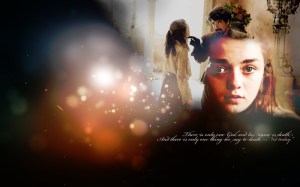
How we deal with death was beautifully written in Games of Thrones by Geroge R. R. Martin. “There is only one God and his name is death. And there is only one thing we say to death … Not today!”
“Nothing is so painful to the human mind as great and sudden change.” Mary Shelley, Frankenstein
Anna Karenina by Leo Tolstoy teaches us that, “It is much better to do good in a way that no one knows anything about it.” Parse that with a quote from Jane Eyre by Charlotte Brontë, “Life appears to me too short to be spent in nursing animosity or registering wrongs.”
There are thousands of inspirational and life-changing words throughout literature, from The Bible to The Wonderful Wizard of Oz or even The Shining. Please, don’t misunderstand me, I am not comparing something as powerful as the word of God to a gothic horror classic. What I am trying to say is, there are words to inspire us in all facets of literature.
The inner demons of self-worth from Jules Verne’s The Mysterious Island come out, where he wrote, “It is a great misfortune to be alone, my friends; and it must be believed that solitude can quickly destroy reason.” The same can be said for The Scarlet Letter by Nathaniel Hawthorne, “No man, for any considerable period, can wear one face to himself and another to the multitude, without finally getting bewildered as to which may be the true.”
“We need never be ashamed of our tears.” Charles Dickens, Great Expectations
An examination of the human psyche has always been an essential part of literature. From The Picture of Dorian Gray, Oscar Wilde wrote, “Nowadays people know the price of everything and the value of nothing.” Even Richard Yates in Revolutionary Road looked into the mind’s eye when he wrote, “No one forgets the truth, they just get better at lying.”
How we spend our days is also a theme carried throughout books. P.D. James in The Children of Men wrote, “We can experience nothing but the present moment, live in no other second of time, and to understand this is as close as we can get to eternal life.” Roald Dahl wrote in The Witches, “It doesn’t matter who you are or what you look like, so long as somebody loves you.”
There are hundreds more that many of us know and use as guiding posts through life. What’s your favorite quote from a book? Please let me know, I’d love to read about it and more. I’d like to leave you with a quote from my own “soon to be published” novel, The Outlander War: Book Three of the Forever Avalon Series. I am, by no means, comparing myself to the great authors represented here. I just wanted to show how my own personal inspiration, my family, comes through in my writing. I hope it can inspire you too.
“When you feel the sunlight warming your face, that’s me looking at you. When the wind blows through your hair, that’s me touching you.
“And when the rain falls on your lips, that’s me kissing you!”
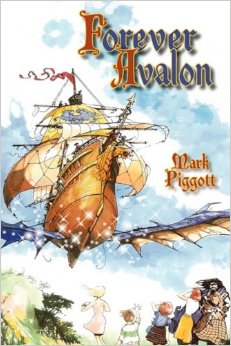
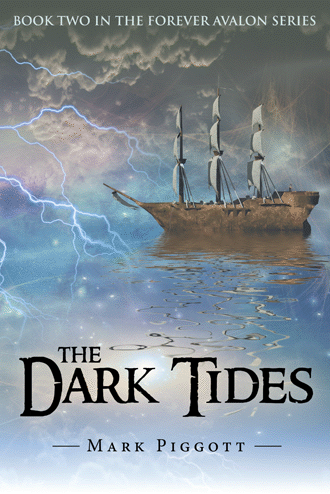
Forever Avalon is available for purchase at Amazon and Barnes and Noble. The Dark Tides is available for purchase at Amazon, Barnes and Noble and iUniverse. The Outlander War can be viewed at Inkitt and cast your vote to get it published.
 The end of the world has been prophesied since the dawn of time. The Mayans said the world would end on December 21, 2012. The Vikings called it Ragnarök when the world ends and the Norse Gods die, only to be reborn. Of course, the book of Revelation in the New Testament goes into detail about the end of the world and the second coming of Jesus; and with the current climate of financial, political and global upheaval happening today, people are scared that our time has come.
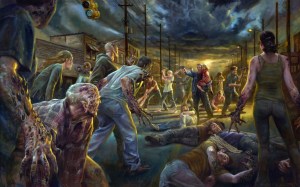 As writers, the end of the world can come about through endless possibilities and that gives us so many options in the stories we tell: Zombie apocalypse, machines taking control, deadly viruses, nuclear war, climate change, etc. We are fatalistic in our views of the apocalypse and show humanity at its worst to bring about the end of the world. Yet, through all that turmoil and tribulation, we find a glimmer of hope. There is always one guiding light or shining star that wins out in the end and gives everyone, from readers to storytellers alike, that spark of optimism that will inspire.
 Disney is known for its great animated movies, the majority of which take place in the fantasy genre. Classics like Snow White and the Seven Dwarfs, Sleeping Beauty and The Sword in the Stone have all the right elements of a great fantasy movie: wizards and witches, dragons and knights, good versus evil, etc. There is one, however, that was a beautiful adaptation of a classic fantasy novel that Disney decided was too dark and scary and swept it under the rug of forgotten classics. I am, of course, referring to The Black Cauldron.
 The imagery in this movie was quite dark and spooky, especially for a kid’s animated movie. The Horned King looked like a walking corpse. It had all the earmarks of a Disney movie with the boy hero, a beautiful princess, the evil villain and his henchmen, and of course, the comedic sidekick; but even with all that, Disney had problems with the film. After its initial audience screening, the Disney Studio chairman Jeffrey Katzenberg ordered massive edits and cuts in the film, particularly in the “cauldron born” scene where the Horned King brings his army of the dead to life. There was even scenes where one of the “cauldron born” monsters sliced the neck of one victim and the torso of another. It was very gruesome indeed.
 Mark Piggott | Fantasy & Steampunk Author