Getting over the a writer’s wall requires inspiration, imagination, and ideas

break throughThere are many walls that writers have to hurdle to make it to the finish line as a published author. Sometimes those walls are self-imposed, like writer’s block, and other times those walls are caused by outside forces, like a publisher’s rejection letter. All of these walls can be overcome and soon, you’re on your way to being a published author.

That’s the best feeling in the world, you know. Holding your book in your hands is a feeling of complete and unadulterated bliss. You know why? It’s because the journey it took to get there was an unrelenting, mind-crushing, pain-filled agony from beginning to end, but maybe, just maybe, its a good thing. Actor Will Smith said,

“You don’t try to build a wall, you don’t set out to build a wall. You don’t say I’m gonna build the biggest baddest wall that’s ever been built. you say, I’m gonna lay this brick, as perfectly as a brick can be laid, and you do that every single day, and soon you have a wall. It’s difficult to take the first step when you look how big the task is. The task is never huge to me, it’s always one brick.”

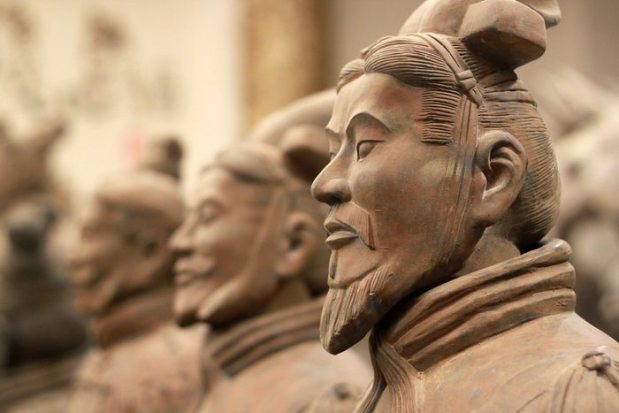
This is just an example of the challenges that await many writers. The walls we build can be both good and bad. When writing, a wall can represent the stagnation in your story, a writer’s block as big as the Great Wall of China. Yet, even these blockages can be diverted, like a beaver dam blocking the river. A little dynamite can go a long way; and by dynamite I mean inspiration, imagination and ideas. Michael Jordan said,

“Obstacles don’t have to stop you. If you run into a wall, don’t turn around and give up. Figure out how to climb it, go through it, or work around it.”

You don’t need a five-step program or a life coach to overcome these obstacles in going from writer to published author. All it takes is a little research, some networking with other independent, self-published authors, and time and effort on your part. Remember, walls aren’t there as obstacles but rather as challenges.

You can break through any wall, without too much pain and damage to yourself. Persistence is the key to breaking down these walls. The whole Galaxy Quest, “Never give up, never surrender!” come to mind. Don’t let the walls discourage you or you may find yourself staring at your computer screen, waiting to type the next word, for weeks on end.

It’s not fun when you hit that wall, but remember, most of the pain is self-inflicted. Pull together that which inspires you to write and use it to climb over, break through or go around the wall. I know a lot of this sounds like a bunch of metaphors, and they are, but they’re good ones.

As writers, we know all the right words to do and say to get our characters out of any mess. The object is to apply those same foils to ourselves. It might not be practical, but it can be quite useful. You do what you have to do to get the story written. Your success counts on one thing and one thing only … YOU!

# # #

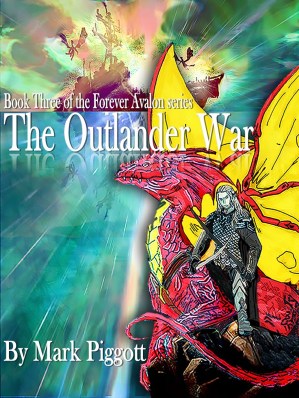
51nd6H6sATL._SY344_BO1,204,203,200_SKU-000941753Mark Piggott is the author of the Forever Avalon book series. Forever Avalon is available for purchase at Amazon and Barnes and Noble. The Dark Tides is available for purchase at AmazonBarnes and Noble, and iUniverse publishing. The Outlander War, Chapter 3 of the Forever Avalon series is coming soon.


Self publishing gives an author hope of being discovered and hitting it big

2016-07-25-21-06-14-writingHope…It’s a word associated with many things, like Star Wars, President Obama, and the first game of your favorite sports team’s season. Hope is a part of faith, family, and charity. This past week, watching the aftermath of Hurricane Harvey filled me with hope for humanity as I watched people helping others without thought of their own safety.

Hope is a big word that fills all our lives on a daily basis; but for an author like myself, hope is what makes us go on. After I finished my first novel, Forever Avalon, in 2007, my hope was to get it published and become a famous writer. I bought a book listing publishers and mailed out my manuscript. I received plenty of rejection letters, sometimes none at all. My hope was fading fast.

Then I received a phone call from a small publishing company, Rock Publishing, who offered to publish my book for a small fee. Now, at the time, I didn’t know what self-publishing was. I thought this was someone truly interested in me a writer and the small fee ($1,200) was because I was a new, untested author. How wrong I was…

The word “vanity publisher” was another way of describing self-publishing houses. It’s an appropriate word, preying on the “vanity” of the authors to be published. It’s true, though, as I was filled with pride, completely overjoyed at seeing my name on a book I could hold in my hands. I didn’t care about the cost. It was worth it.

The problem was in the writing. Most vanity publishers aren’t concerned if your book has been edited, polished, and thoroughly vetted, unless you pay for it that is. That’s the thing with self-publishing–you pay for everything you need from your publisher,including marketing, cover and interior art, editing, etc. I received more editing from my mother than I did my first publisher, and she gave me edits after it was already published.

My second book, The Dark Tides, was published through iUniverse publishing company. They gave me tons of support and wonderful customer service, for a higher price than my first. I paid even more for editing, marketing, special events, and artwork. Even with the higher cost, the results were similar to my first book. This would tell you that maybe writing isn’t your thing, that your stories are not what people are looking for, and yet I continue to write.

As an author who self publishes, you rely on yourself for everything from marketing, social media, setting up book signing events, all the while your working on your next story. It can be a frantic existence for any author, but we continue to strive on with that little bit of hope.

Self-publishing has its ups and downs, good and bad experiences for any independent author. Others would give up with little to no success, but I just can’t do it. Why is that? Is it vanity or something more? Its not vanity, its hope. Through it all, I still have that little bit of hope deep inside. I’m in the process of editing my third book and already started working on the fourth. That’s what it means to be an author, filled with hope in the spirit that one day your work will be recognized. “Never give up, never surrender!”

# # #

51nd6H6sATL._SY344_BO1,204,203,200_SKU-000941753Mark Piggott is the author of the Forever Avalon book series. Forever Avalon is available for purchase at Amazon and Barnes and Noble. The Dark Tides is available for purchase at AmazonBarnes and Noble, and iUniverse publishing. The Outlander War, Chapter 3 of the Forever Avalon series is coming soon.


Let stupid people say stupid things because it only makes them look stupid

“Congress shall make no law respecting an establishment of religion, or prohibiting the free exercise thereof; or abridging the freedom of speech, or of the press; or the right of the people peaceably to assemble, and to petition the Government for a redress of grievances.” — 1st Amendment of the U.S. Constitution

The first amendment in the United States Constitution addresses something that is quite unheard of in some areas of the world. The founding fathers placed this at the top of our governing document to underscore the importance of these basic freedoms: Freedom of Religion, Freedom of Speech; Freedom of the Press, etc. These basic rights are undeniable in the United States of America.

ft-first-amendment-alliance-nonprofit-free-speechIn recent weeks, those rights have been tested with the events of Charlottesville and the subsequent rallies and protests since them. The question remains, is hate speech protected? If I disagree with what you’re saying, do I have the right to shut you up?

Even the strictest constitutional scholars will say that all speech is protected, even when you disagree with it. There are those that feel the hate speech shouldn’t be protected, but that’s grown now to include anytime a conservative speaks by groups like Black Lives Matter and ANTIFA. Some people also defend NFL players sitting or kneeling for the national anthem a type of free speech protest, but it has also come under scrutiny.

So, that’s the tough question. Is all speech protected or should certain speech be restricted. As authors, I am 100% for free speech. George Washington said, “If freedom of speech is taken away, then dumb and silent we may be led, like sheep to the slaughter.” To me, that quote epitomizes what freedom of speech is.

I don’t like the racists rants of white supremacists and the KKK, nor do I care to hear them. I also don’t care for the anti-American stance of ANTIFA and BLM. In any case, I will defend your right to say it. Speech is a choice. You can say whatever you want, and I can CHOSE whether or not to listen to you. That’s why there is a mute button on the TV. I can turn you off just as easy as changing the channel.

To me, that’s how freedom of speech works. Voltaire say, “I do not agree with what you said but I will defend to death your right to say it.” That is the ultimate truth. My opinion has always been to let stupid people say stupid things because it only makes them look stupid. You can make your point just as easy by letting people talk.

As an author, I love the fact that my words are protected. I’m going to leave it with a quote by Ray Bradbury from his novel Fahrenheit 451. I think it speaks volumes for what we are witnessing and feeling today.

“The books are to remind us what asses and fool we are. They’re Caeser’s praetorian guard, whispering as the parade roars down the avenue, ‘Remember, Caeser, thou art mortal.’ Most of us can’t rush around, talking to everyone, know all the cities of the world, we haven’t time, money or that many friends. The things you’re looking for, Montag, are in the world, but the only way the average chap will ever see ninety-nine per cent of them is in a book. Don’t ask for guarantees. And don’t look to be saved in any one thing, person, machine, or library. Do your own bit of saving, and if you drown, at least die knowing you were headed for shore.”
Ray Bradbury, Fahrenheit 451

# # #

51nd6H6sATL._SY344_BO1,204,203,200_SKU-000941753Mark Piggott is the author of the Forever Avalon book series. Forever Avalon is available for purchase at Amazon and Barnes and Noble. The Dark Tides is available for purchase at Amazon, Barnes and Noble, and iUniverse publishing. The Outlander War, Chapter 3 of the Forever Avalon series is coming soon.

My next project … “Corsair and the Sky Pirates” Steampunk adventure

As I work with my editor to get The Outlander War ready for publication, I am looking ahead to my next project. To be honest, I am planning to continue the story of the Gil-Gamesh and the MoonDrake family on Avalon with another trilogy, but I wanted to step away for a second. I wanted to try a science fiction adventure, specifically a STEAMPUNK adventure.

I have always been fascinated by the steampunk genre, from the Victorian sensibilities to the wild, gear-driven, steam-powered inventions. It reminds me so much of Jules Verne and his fantastic novels, which is why I decided to write this story. So, without any further adieu, I present to you the prologue for my next story, “The Adventures of Corsair and the Sky Pirates: Uriel’s Flame” on Inkitt.

* * *

DesertShadows_Myke_Amend_desktop-Imagine that Jules Verne, the prophet of science fiction, and Nikola Tesla, the genius inventor, had met. What would the world be like? Steam-powered machines like you’ve never seen before, bringing about a new age of science and industry, and bringing the world one step closer to war. In this age of modern mechanical marvels, the wealthy have gotten richer off the backs of workers, toiling in the factories all around the globe to produce these wondrous inventions. The only person standing up for the people is the infamous Corsair and his Sky Pirates. In his dirigible, the Arkaroo, Corsair searches the globe for the source of power for these incredible machines… Uriel’s Flame. Meteor fragments from a passing comet provides unlimited power for these steam-powered, modern marvels. Whomever controls Uriel’s Flame controls the main source of power in the world, leading countries to the brink of war. The Edison/Roentgen/Fulton, or ERF, Corporation is searching far and wide for the meteors, giving them complete control of this valuable mineral. It’s up to Corsair and his Sky Pirates to stop them and prevent a world war from impacting the world.

* * *

1887 in the city of Amiens, France. The port city in northern France was not the bustling seaport it appeared to be, but rather a quiet, little community divided by the Somme River. It’s home to one of the largest cathedrals in France and one of the world’s greatest authors.

At a small café in Quartier St.-Leu, Jules Verne sipped quietly on his coffee as he sifted through the newspaper. Verne enjoyed the quiet moments like this. It helped to clear his mind and arrange his thoughts for the next adventure.

You wouldn’t know by looking at this quiet, little man that he was such a renowned author. His white hair and beard match the wrinkles on his face. He rubbed his left leg, hoping to relieve the pain. It still ached where his nephew, Gaston, shot him. The poor boy, locked away in an asylum, with little to no explanation as to why he did it.

The pain was a constant reminder to Verne… a reminder of his own mortality, and it scared him. He left behind a legacy in his stories of science and adventure, but was it enough, he wondered? Do these ‘flights of fancy’ mean anything beyond the pages on which it was written?

Pardon moi, monsieur,” came a voice, startling Verne. “Are you Jules Verne?”

He looked up from his newspaper to see a tall, lanky young man standing next to him. He bowed slightly, a bowler hat rested in his hand over his heart. Through his burly mustache and thick accent, Verne knew the young man had to be from Eastern Europe. His dark clothes reminded Verne of an undertaker. He hoped that was not the case.

Oui, may I help you?” Verne asked.

“I am Nikola Tesla,” he said. “I am a great admirer of your work, Monsieur Verne. I apologize for interrupting you, but your housekeeper said I might find you here. I was hoping I could have a moment of your time.”

Verne thought for a moment before nodding and motioning for him to sit down. Tesla was overjoyed as he sat in the chair across from Verne. Before he could say anything, the waiter came over to the two men.

Voulez-vous un café, monsieur?” he asked Tesla.

Oui, merci?” he replied. “Et un verre d’eau s’il vous plait.” Tesla waited for the waiter to depart before he said anything, but Verne spoke first.

“From your accent, I can assume you are from Eastern Europe, Monsieur Tesla. Austria or Hungary, am I correct?” Verne inquired.

“Serbia, Monsieur Verne, but it is part of the Austro-Hungarian Empire, so you are quite correct.”

“And what brings you to Amiens? Surely you did not come here just to get my autograph?” Verne quipped.

Non, Monsieur…” Tesla stated, but stopped while the waiter brought over his coffee and set it down in front of him before leaving. “I work for the Continental Edison Company. I was sent here to work on your cities electrical system. I thought I might get the chance to speak with you before I return to Paris.”

“Edison, well, I must thank you for the electric lights,” Verne commended. “It is better than writing by candlelight at three in the morning.”

Tesla smiled and nodded in appreciation of the compliment. “Thank you, Monsieur Verne. Perhaps I can inspire you in another way,” Tesla remarked as he pulled out a folded piece of paper from his coat and handed it to Verne.

“What is this?” he asked. “I thought you weren’t looking my autograph.”

“No, no … this is something that your words inspired me to create.”

Verne’s curiosity was peaked as he unfolded the paper. When he saw what was inside, his eyes grew as large as hen’s eggs. It was an engine, one so complicated in design that Verne could not understand the intricacies of what he was looking at. Around the engine was a crude drawing of a ship, a submersible ship that resembled his description of the Nautilus from his novel, 20,000 Leagues Under the Sea.

Incroyable,” Verne whispered, amazed at what he saw. “What is it?”

“A steam-powered oscillating electric generator,” Tesla explained. “It can generate 20 times the electrical power of anything today, maybe more. This could power a ship, like your Nautilus, don’t you think?”

“Indeed … indeed it could, but it would take a ton of coal just to generate the amount of steam you would need for such an engine, wouldn’t you agree?”

“Yes, but not with this,” Tesla said as he reached into his pocket and pulled out a small test tube. Inside were a few small blue stones that glowed slightly. He handed it to Verne, who stared at them in awe.

“What on Earth are they?” Verne asked.

“They’re from a meteor that fell near my home in Serbia,” Tesla began to explain, until the waiter stepped up and brought him his coffee and a glass of water, as he requested. He waited until the waiter departed to continue his explanation. “It generates a constant heat that never seems to die out. Here, observe…”

Tesla took the cork off the test tube vial and poured out one small meteorite into the glass of water. The blue rock began to bubble and burn, raising the temperature of the water quite rapidly. Soon, the water was boiling as steam arose from the glass. Tesla took a spoon and pulled out the tiny rock before dropping it on the table.

“You can pick it up, Monsieur, it won’t burn you.”

Verne reached down and tentatively touched it with his fingertips, until he realized how cool the rock was and he picked it up and held it in his hand. “Monsieur Tesla, this is quite, well… Remarquable!

“It burns on and on, without any reduction in size or mass,” Tesla boasted proudly. “It could change the world of science and industry as we know it.”

“Is there any more of this meteor?” Verne asked. “Where does it come from?”

“I have a colleague at the Royal Astrological Society who discovered a comet he named Uriel, after the archangel,” Tesla explained. “Fragments from Uriel are impacting the Earth from the Urals to the Alps and across North America as the comet passes by. We are working on a method to detect the fragments of meteorite. So far, I’ve collected nearly 500 kilograms.”

“You are an incredibly talented young man, Monsieur Tesla,” Verne said as he handed him the meteor, dropping it in the tube. Verne then folded the paper and handed it back. “But, what does this have to do with an old man like me? I am a writer, not a scientist.”

“Your stories have inspired me to pursue new avenues of science,” Tesla said. “I would like to collaborate with you on some ideas that I have. I have the scientific knowledge, you have an incredible imagination. Perhaps, together, we can bring about a new age of science and technology.”

“Won’t that interfere with your work at the Edison Company?” Verne asked.

“I have already put in my notice to leave my position with Edison,” Tesla explained. “I am planning to go to the United States to pursue my own dreams, but I wanted to work with you before I go.

“Besides, I don’t want my ideas to come under an Edison patent instead of my own. Something like this,” he said, shaking his design at Verne, “could change the course of human history. It just needs a little imagination to make it come true. You, Monsieur Verne, are a master of imagination. Imagine what we could accomplish together?”

Verne sat there, intrigued by the young man’s offer. For the first time, he saw how his novels can influence the future of mankind. “Very well, Monsieur Tesla. Where do we begin?”

# # #

51nd6H6sATL._SY344_BO1,204,203,200_SKU-000941753Mark Piggott is the author of the Forever Avalon book series. Forever Avalon is available for purchase at Amazon and Barnes and Noble. The Dark Tides is available for purchase at Amazon, Barnes and Noble, and iUniverse publishing. The Outlander War, Chapter 3 of the Forever Avalon series is coming soon.

Heroes come in many shapes and sizes

Heroes are some of the most complicated characters, in real life and in fiction. As a writer, you try to emulate the best qualities in your hero: humility, bravery, honor and compassion. When you look through history, there are many great examples for a writer to emulate in their characters. Sometimes, though, you find it in the everyday people you know.

Lord Bryan MoonDrake [2072845]In the Forever Avalon series, I patterned my main protagonist, Lord Bryan MoonDrake, the Gil-Gamesh of Avalon, after a number of people I’ve known or read about. I wanted to share my muses with you to demonstrate how intricate one character could be.

First and foremost, he was a Sailor in the U.S. Navy, a Chief Aviation Boatswain’s Mate working on the flight deck of a nuclear aircraft carrier. Now, I’m a retired Navy Chief, but I never worked on the flight deck on a daily basis. One of the most fearless men I ever saw was Chief Aviation Boatswain’s Mate Gerald Farrier. On July 29, 1967, aboard the USS Forrestal (CV-59) off the coast of Vietnam, a Zuni rocket misfired, causing an explosion of jet fuel and munitions on the flight deck. Chief Farrier, ignoring his own safety, grabbed a PKP bottle (fire extinguisher for fuel fires) and charged toward the burning aircraft in the hopes of saving the pilots trapped in their burning aircraft. He continued to fight the fire until one of the bombs under the aircraft wing exploded, killing him and other members of the flight deck firefighting team. That was courage above and beyond the call of duty.

The only other time I witnessed something like that was as a young Sailor aboard the aircraft carrier USS George Washington (CVN 74). We were on deployment when a fire broke out on one of the ship’s sponsons, spreading up to the flight deck and into the ship through the ventilation system. My leading chief, at that time, was Chief Gregg Snaza. He was in charge of the repair locker I was assigned too. Once the fire broke out, the ship was called to General Quarters. For four hours, we fought the fire. I watched as Chief Snaza, without regard to his own safety, donned an OBA (Oxygen Breathing Apparatus) and went in to relieve one of the team leaders in charge of the firefighters. I still remember watching him volunteer and don that OBA. It’s that bravery that sticks with you and finds its way into your characters.

Another trait of the Gil-Gamesh is the heart of a warrior: Fierce in battle, courage under fire, and a heart of gold. For these traits, I have dozens of examples to use for inspiration from John Wayne to Audie Murphy, Amelia Earhardt, and Michael Murphy.  The best example, though, is my father, Master Sergeant William Piggott, U.S. Marine Corps. My Dad served for 22 years, did two tours in Vietnam. He’s a quiet man, not much of a talker, but whenever I needed him, he was there. His quiet compassion and understanding is an example I try to set with my own children. He is my hero, and I don’t tell him that often enough.

Heroes are not perfect, but they’re really the embodiment of the many men and women who inspire us on the big screen and in real life. Translating those traits into the heroes of your own stories is not that difficult, as long as the inspiration for those characters resonate with your audience.

###

51nd6H6sATL._SY344_BO1,204,203,200_SKU-000941753Mark Piggott is the author of the Forever Avalon book series. Forever Avalon is available for purchase at Amazon and Barnes and Noble. The Dark Tides is available for purchase at Amazon, Barnes and Noble, and iUniverseThe Outlander War can be previewed at Inkitt.

Prophecy has been an essential part of science fiction writers

bh7kcyidqx7vfe9cxoxc

“I, for one, bet on science as helping us. I have yet to see how it fundamentally endangers us, even with the H-bomb lurking about. Science has given us more lives than it has taken; we must remember that.” Philip K. Dick

One of the thing we love about science fiction is that it allows us to see the future. Do you think someone who read Jules Verne 20,000 Leagues Under the Sea could imagine being aboard a submarine? Or flying into space and landing on the moon after reading 2001: A Space Odyssey? The future can always be found in the pages or science fiction novels.

Books like Brave New World, 1984, Stranger in a Strange Land, and I, Robot are just a few of the 20th Century novels that accurately predicted the future; but it’s not just authors who can be hailed as prophets. Gene Roddenberry’s Star Trek accurately portrayed digital music, hand-held computers, ebooks and so much more.

Isaac Asimov said, “Individual science fiction stories may seem as trivial as ever to the blinder critics and philosophers of today – but the core of science fiction, its essence, the concept around which it revolves, has become crucial to our salvation if we are to be saved at all.”

9c074ebf323afe53d646eb1465cfb837It strange how right, and sometimes how wrong, science fiction has been. I remember watching Lost in Space on TV as a kid. The Jupiter 2 mission was supposed to have taken place in 1984. Granted, that prophetic vision didn’t come true, but it was something that stuck in the memory of an impressionable child.

I think that’s why a genre like steampunk is so popular today. It combines the past, present and future together, as if people are living within the world of science fiction. It also explains the popularity of movies like Star Wars, Blade Runner, Star Trek and Jurassic Park. They show all that is good and all that is wrong with the future.

I know there are a lot of dystopian future novels like The Hunger Games, The Maze Runner and others out there, and they do espouse a new future, but I really don’t consider them prophets. Their future doesn’t look ahead to better things but rather show us a world after war, famine, or pestilence through the eyes of our children. These novels were meant to be a warning, not a prophecy.

Science fiction writers can be prophets but they also act as harbingers, as it were, of those things that could doom the human race. Ray Bradbury’s classic Fahrenheit 451 made us look at how knowledge and education that comes from books can be abused and even lost. He said, “You don’t have to burn books to destroy a culture. Just get people to stop reading.”

That’s the crux of science fiction prophets. They are establishing what direction we take toward the future. We can work hard to created a new world on another planet, like The Martian Chronicles, or start a new life under the ocean like 20,000 Leagues Under the Sea, or maybe a new world within cyberspace like Neuromancer.

“Science, my lad, is made up of mistakes, but they are mistakes which it is useful to make, because they lead, little by little, to the truth.”  Jules Verne, Journey to the Center of the Earth

Science fiction writers go beyond stories about aliens, other worlds, and future tech. They are explorers of what could be and what will be. We should embrace the future and, as writers, look ahead to those many possibilities. You don’t have to be a scientist to write science fiction, just someone who can see beyond the horizon and imagine more.

###

51nd6H6sATL._SY344_BO1,204,203,200_SKU-000941753Mark Piggott is the author of the Forever Avalon book series. Forever Avalon is available for purchase at Amazon and Barnes and Noble. The Dark Tides is available for purchase at Amazon, Barnes and Noble, and iUniverseThe Outlander War can be previewed at Inkitt.


Villains should be feared, not misunderstood

a7d3a954d6b0e766909d9fa776106447

“All things truly wicked start from an innocence.”─ ERNEST HEMINGWAY, A Moveable Feast

I don’t get it … Villains are becoming more popular than heroes nowadays. People cheer and rave over characters like Venom, Hannibal Lecter, Darth Vader and Dracula. What happened to the days of good guys who wore white and bad guys wore black. You could clearly identify who the bad guys were and you never felt an ounce of sympathy for them.

Today, there writing books, TV series and movies centered around villains. For example, Fox’s TV series Lucifer. I mean, its a show about the devil on Earth. Here’s the guy, whom I was taught in endless Sunday School lessons, was the epitome of evil and he’s portrayed as if he cares about humanity. How can a guy be the ultimate evil if he’s a softy for solving crimes? It doesn’t make any sense.

Comic book characters like Venom, Deadpool and Harley Quinn are being pursued as quasi-heroes, characterized as bad, yet somewhere, deep down inside, therein lies a hero. Even Disney villains are not what they’re cracked up to be. Maleficent was, by all counts, and evil sorceress. That’s how she was portrayed in the Sleeping Beauty movie I saw as a kid. And yet, with the help of Angelina Jolie, she’s became a complicated villain and Aurora’s father is the true villain of this movie. Wait, what?

“Many evil things there are that your strong walls and bright swords do not stay.” ─ J. R. R. TOLKIEN, The Fellowship of the Ring

You see how confusing it has become. There are more movies, books and TV shows out there with villains who are loved, not scorned. I mean, vampires and demons used to be some of the scariest monsters out there. I remember the Exorcist, The Omen, and all the old Hammer horror films featuring Christopher Lee’s Dracula. Even the original Salem’s Lot TV movie (starring David Soul of Starsky & Hutch fame) was as terrifying as the Stephen King novel. Every time I heard something at my window, I wondered if there was a child vampire floating outside, asking to invite me in.

I believe there is good and evil, no in between. To me, you can’t justify the immorality and wanton disrespect for life. A killer is a killer, plain and simple. Can you really justify someone like Charles Manson or John Wayne Gacey? The monsters are not redeemable nor should they be.

In the article “So bad it’s good: Why do we find evil so alluring?”, writer Terry Eagleton had a simple answer. “One answer might be: when goodness began to look boring. We can blame this on the puritanical middle classes. It is they who redefined virtue as thrift, prudence, meekness, abstinence, chastity and industriousness. It’s not hard to see why some people should prefer zombies and vampires. Goodness came to seem negative and restrictive.”

As a writer, I take evil quite seriously. To me, evil is just that, evil. Writers have the responsibility to show people what evil looks like. I we can help them recognize what true evil is, you can avoid it, and even destroy it.

Here is an excerpt from my upcoming third novel in the Forever Avalon series, The Outlander War, where the two villains of my story–Abdel Ben Faust and a “yet to be named” master–meet and discuss their plot to destroy the Gil-Gamesh and take the throne of Avalon.

###

On Avalon, South Essex was known as a city of artisans. The finest craftsman could be found in South Essex of all mediums—wood, metalwork or canvas—as well as exceptional tailors, tinkers, and tradesmen. It was a town full of the finest shops you could ever find outside of New Camelot.

The Black Swan was one of the most reputable taverns in South Essex, with the finest wine and spirits in all of New Camelot. The food at the Black Swan also had a reputation for being the best served in all Avalon. But even the best places can attract some unsavory characters.

Inside, the tavern was brightly lit with the glow of candlelight and roaring fires. The rooms were decorated in the finest silk drapes and tapestries of red and black. The décor epitomized the name of the tavern as swans could be seen represented in various shapes and sizes from statues to wall sconces.

While the rest of the tavern was crowded, as usual, the back of the room was empty, except for one guest. The owner did this at the request of the guest but also so his other patrons wouldn’t be subjected to his company.

He sat alone with his back to the wall, gorging himself on rare roasted beef and bottles of 500-year-old Aldinian Whiskey. He appreciated spirits, especially rare ones, and he always came to the Black Swan whenever he was in town because they always carried the best.

His name was Abdel Ben Faust, a mercenary by trade and considered by many as the finest swordsman on Avalon. His long black hair was pulled back tightly in a ponytail, exposing his pointed ears and long face. A scar ran from his left temple, across his nose, and down his right cheek … A reminder of being cut from his mother’s womb. His mustache was long and thin, hanging down below his chin, but that was where his true heritage showed through.

His skin was reddish-brown and, from his chin, grew horns that resembled a goatee, twisted like braided hair. Abdel Ben Faust was a half-demon, the son of a witch and an Incubus, conceived during a blood moon in a magical ritual. His mother died while giving birth to him. He had to be cut from her womb by the same clerics that killed his demon father.

Faust was raised a slave, tormented regularly for his demonic form, but in his torment grew strength and resolve. He molded himself from slave to warrior, becoming a master swordsman, available to the highest bidder.

He has avoided conflict with the Gil-Gamesh since his return to Avalon thanks to an innate ability from his demonic lineage. Faust can conjure “demon holes” to move from place-to-place, unseen. Demon holes were doorways of black smoke, fire, and brimstone. Only binding him in iron chains prevented him from using his power.

Faust came to South Essex to indulge his tastes while the Gil-Gamesh and the rest of the Knights of the Round Table moved to the coast to protect Avalon from the Outlanders. He knew there would be no trouble coming to the Black Swan and drinking his fill before moving on to his next job.

The curtain to the back room was pulled aside as young Finnick Devereaux, son of the Earl of South Essex, Sir Robert Devereaux, stepped in. The young man was nearly 50, young for a noble of Avalon. His dirty blonde hair, dashing good looks and fine clothes endeared his upright lineage. He pulled a handkerchief from his inside pocket and waved it in front of his face as he tried to dispel the stench coming from Faust.

“He is here milord, just as I said,” Finnick said to someone behind the curtain. A robed, hooded figure stepped through, walking right past the young noble.

“Good … Leave us Finnick, and make sure we are not disturbed,” the hooded figure said.

“Are you sure you want to do this milord?” Finnick asked. “The last man who interrupted Abdel Ben Faust while he was eating had his head chopped off and tossed into a stew pot.”

“Not worry, I’ve come bearing gifts,” he said as pulled a bottle from out of robe pocket. Finnick just bowed and left the room, closing the drapes behind him.

The stranger walked up to Abdel’s table but stopped when he drew his sword as he chugged down the last of the whiskey, resting his blade across the table. It was a broad sword, nearly four feet long, with a jagged edge etched along the top edge of the blade. Wisps of smoke rose up from the sword, as if it was burning, as the runes etched on the blade glowed softly. This was Deathsong, a cursed blade that only Abdel Ben Faust could wield and he did so very well.

“I’d think twice before sitting down,” Faust warned as he finished his drink. The stranger just placed the bottle down in front of him. Faust dropped his own bottle to examine the gift.

“Can it be?” he exclaimed. “Panaque, distilled from the vines of the dryads of Meliai, over 4,000 years old!” He popped the cork and smelled the delicate bouquet of the fine spirit. He looked up at the stranger and nodded his head to the chair in front of him. The hooded figure sat down as Faust sheathed his sword and poured himself a drink.

“So to what do I owe this honor and who do I have to kill to keep this bottle?” he asked as he took a sip of the delicious liquid.

“The bottle is yours, Abdel Ben Faust, a gift for listening to what I have to say,” he began. “But first, I have a question for you. Last year, when Morgana le Fay was resurrected, why were you not part of her forces at the Battle of Idlehorn Mountain? Surely a swordsman of your caliber could have turned the tide in her favor.”

Faust seemed to be insulted by the stranger’s accusation but took it in stride for the moment. “Her cause was lost from the moment she began,” he scoffed as he took another sip.

The hooded man seemed irritated by his answer but just sat back and listened. “Why do you say that?”

“Because she let the Gil-Gamesh live,” he answered. “You don’t give someone like the Gil-Gamesh any glimmer of hope. She should have killed him when she had the chance. That’s always been the problem with despots like Kraven Darkholm and Morgana le Fay. They want that power but they want to gloat about it in the process. That’s what got them killed.

“I don’t side with losing causes,” he concluded as he downed the last of his drink. “I’ve answered your question, now you answer mine … What do you want?”

“I want you to lead an army to take Avalon out of the grips of the Pendragon’s and the Gil-Gamesh,” the stranger said without skipping a beat.

Faust just laughed under his breath. “Well if you wait long enough, the damn Outlanders with all their technological weapons will do it for you.”

“Oh, I doubt that,” the stranger impugned. “If the Gil-Gamesh is as resourceful as you say, then all I have to do is wait until he restores Avalon as it was before, hidden from the outside world. Then, we tear Avalon apart, taking the throne and killing him in the process.”

Faust was not convinced by the hooded stranger’s plan. He laughed again as he poured himself another drink. “Well in the first place, you’d need an army at least 10,000 strong,” Faust calculated. “Hell, the goblins don’t even have half that number anymore, and the trolls are all whipped lackeys for that Shield Maiden now. So where is this army you speak of?”

The stranger reached into his robe and pulled out the ruby amulet, still glowing from the strong magic’s imbued within. Faust just looked at the amulet, unfazed and uncaring. “What’s that supposed to be?” he asked.

“The key to controlling the most powerful army in creation, the Wraith Legion of Purgatory!” Abdel Ben Faust was stunned, aghast at the stranger’s claim. The Wraith Legion was an army of fallen knights, trapped in purgatory because of some dishonor or shame that fell upon them in life. They served a penance, keeping the demons of the underworld in check until, one day, they’ve earned their place in Heaven.

“No one can control the Wraith Legion. It’s impossible,” he exclaimed.

“You can with this,” the stranger said, dangling the amulet. “With this amulet, they will follow your every command. You will be their General, Abdel Ben Faust, and you will conquer Avalon for me.

“In return, I will give you the Twin Swords of the Dragon Moon as payment, for your collection.”

It is known that Abdel Ben Faust has, over time, collected the sword or weapon of every knight, every warrior and every monster he ever bested in battle. He kept his collection hidden from prying eyes. He liked to savor each and every victory by looking at the weapons of his fallen enemies hanging on the walls of his vault. Adding the swords of the Gil-Gamesh would be the centerpiece of his collection.

The stranger had intrigued Faust with his offerings but wasn’t convinced completely just yet. He needed to know something more. “Who are you?” he asked.

The hooded figure stood up and peeled back his hood, revealing his face to Faust. The half-demon was stunned as he recognized the face almost immediately. “You? But that’s impossible, you’ve been dead for centuries, millennia even! It can’t be you!”

The stranger pulled the hood back over his head and sat back down. “I assure you, it is me, Abdel Ben Faust. I have many machinations at work, but I need a general to lead my army. You are the one man I can entrust with this task because I know that you will only accept my offer if you believe it can succeed.

“So will you, will you join me?” he asked. Faust sat there, stroking his chin, contemplating all the stranger has offered him. After a few moments, he raised his glass to him.

“When do we get started?”

###
51nd6H6sATL._SY344_BO1,204,203,200_SKU-000941753Mark Piggott is the author of the Forever Avalon book series. Forever Avalon is available for purchase at Amazon and Barnes and Noble. The Dark Tides is available for purchase at Amazon, Barnes and Noble, and iUniverseThe Outlander War can be previewed at Inkitt.
The “Yellow Journalism” of yesterday is the “fake news” of today, only prettier

32185195164_d8a28b36a6_oHave you ever heard of The Yellow Kid? The Yellow Kid was the name of one of the first American comic strip characters that ran from 1895 to 1898 in Joseph Pulitzer’s New York World, and later William Randolph Hearst’s New York Journal. Created and drawn by Richard F. Outcault, this comic strip was ripe with social commentary in newspapers known for sensationalism and extreme editorial reporting. It’s where the term “Yellow Journalism” came from.

In today’s day and age, we are coming back to a new form of “Yellow Journalism” though it’s seen by a lot more people through social media and the internet and packaged in high-definition video and “talking heads” that need plenty of censorship for bad language. I can’t help but see the reflection of the Yellow Kid in today’s media.

For those of you who don’t know, I began my writing career more than 30 years ago as a U.S. Navy Journalist. I attended THE school for military journalism, The Defense Information School (DINFOS) at Fort Benjamin Harrison, Ind. (now, the school resides at fort Meade, Md.). I have written hundreds of news articles, press releases and feature stories on the wonderful men and women of our armed forces. These articles, stories and photographs have been published in small town newspapers, major metropolitan newspapers and military publications.

I told you this because I wanted to talk today about the state of journalism, or actual lack thereof, in the world today. In my opinion, journalism today is not what it’s supposed to be. Journalism is defined as “the activity of gathering, assessing, creating, and presenting news and information.” It is also the product of such activities. That being said, the way it is done by the news media today does not even come close to that definition.

We seem to have crossed that fine line between actual journalism and opinion news, and a lot of it revolves around politics. Now, I’m not trying to get political here, but it’s being abused by both sides. People are comparing what is being reported in the news to Watergate in the 70’s. I can tell you right now, we are nowhere near that.

If you’ve ever read “All the President’s Men” by Bob Woodward and Carl Bernstein, or seen the movie with Dustin Hoffman and Robert Redford, you know how much they went through to get multiple sources to confirm their story about the going’s on in the Nixon Administration. Until they got those sources to confirm, their editor wouldn’t run the story.

Today, it seems like one anonymous source is good enough. The facts are being skewed to fit the agenda, and journalists are not supposed to have agendas. The public relies on these news sources to be the independent watchdogs of government, and yet, they are injecting themselves to be part of the story. Journalists are supposed to report on the story, not be the story.

Journalists today are selfie-taking, opinion making, propaganda artists that don’t care whether or not the story is true, as long as it puts them in the spotlight and meets their agenda. One of the great movies on what journalism is supposed to be is the Academy Award winning “Spotlight” about the child abuse cover-up within the Catholic Church. Just like in “All the President’s Men,” the journalists here went out of their way to get the facts before they printed the story. Without writers like this, the truth remains buried and silent.

Writer/photographer/film critic Seno Gumira Ajidarma said, “When journalism is silenced, literature must speak. Because while journalism speaks with facts, literature speaks with truth.” Though I agree with his sentiment wholeheartedly, we must also agree that writers have a certain responsibility above journalists.

Our stories must reflect the good, the bad and the indifferent in society in an attempt to bring about the improvement of the human condition. It was books like “The Jungle” and “To Kill a Mockingbird” that brought about change in society when journalism failed. I’m not trying to say that all writers need write profound soliloquies and novels professing the highs and lows of society, but rather talk about it in a way that reflects the good and the bad.

In the Forever Avalon series, I touch on racism, women’s rights, faith and family through the adventures of a modern family in a medieval fantasy world. I reacted to the good and the bad of these “hot button” issues and showed the reader how best to resolve such issues. I’m not professing to be an expert in this, but I give an honest opinion and open approach to dealing with these subjects.

Norman Mailer said, “If a person is not talented enough to be a novelist, not smart enough to be a lawyer, and his hands are too shaky to perform operations, he becomes a journalist.” Sad as that may be to hear the truth, we (journalists, writers, poets, novelists, etc.) help shape the mindset of society through reporting the facts, giving opinions and reflecting on society today. I just think we need to make sure we separate fact from fiction so that the people, our readers, can make an informed judgment.

###

51nd6H6sATL._SY344_BO1,204,203,200_SKU-000941753Mark Piggott is the author of the Forever Avalon book series. Forever Avalon is available for purchase at Amazon and Barnes and Noble. The Dark Tides is available for purchase at Amazon, Barnes and Noble, and iUniverseThe Outlander War can be previewed at Inkitt


Diversity is something we all must come to terms with as writers

nhnzry3jycv4bf2qxt63Recently, Marvel’s Vice President of Sales, David Gabriel, claimed that the company’s recent focus on creating diverse superheroes is a driving factor behind its declining comic book sales. He said, “Any character that was diverse, any character that was new, our female characters, anything that was not a core Marvel character, people were turning their nose up.”

I don’t agree with this statement, but I can see where he gets his point of view. Recently, there has been a trend to make comic book characters more diverse, but I think that’s more of a natural trend. More diverse characters started out as villains (like The Mandarin and Diablo, for example) but that trend has been changing as time progressed. The 70’s brought us Falcon and Luke Cage, the 80s and 90s brought out War Machine, Black Lightning and Storm. Sometimes it’s more about age than anything else.

Think about it … Captain American, Iron Man and Thor have been leading the Avengers since the 60’s. These characters haven’t aged like the rest of us. I mean, the original X-Men were teenagers in the 60’s, meaning that they should be senior citizens by now. Some characters like Superman and Wonder Woman can look the same because they are alien and God-like, respectfully. However, Batman today is more represented by the elder Bruce Wayne in the Batman Beyond series, not as he is in the comics. I loved it when Dick Grayson took up the mantle because that’s how it should be, but of course they went back to Bruce.

I understand I’m talking more about age discrimination than diversity, but here’s my point. People age, they grow old and they die. So why not let a new generation take up the mantle of these heroes. I think Kamila Khan was a great choice as the new Ms. Marvel, not because she was Muslim, but because she was like many of us who like comics … She’s a fan! Here’s a total fan girl who gets superpowers and becomes her idol. I don’t think there’s a single person out there reading this blog who hasn’t had the same fantasy.

I think the first problem people may have is the youth of the characters. You have comic book fans who started reading comics in the 60s/70s, like me. You don’t need to make all these new characters to be kids. I mean, the new Iron Man (Iron Heart, Riri Williams) and Hulk (Amadeus Cho) are all super smart teenagers, for example. It’s a trend right now that’s pushing the envelope. for us older readers. 

I like it when a longtime sidekick/friend takes over the mantle. Sam Wilson (Falcon) as the new Captain America was a great choice because here was an established character taking the shield and responsibility. The same with Jane Foster as Thor. That was a brilliant move, even with the cancer angle, to give her even more reason to be worthy of the hammer.

Diversity is not the problem with comics. You have four different people wearing the mantle of Spiderman, from the original to a clone, a Latino African-American, a Hispanic from the future, and even a young girl (Spider-Gwen). This is where diversity was done right, bridging the gap across generations. That’s how it needs to be done.

In comics, it has never mattered about the color of their skin. It’s about the heart and soul of the character, as a hero, villain or everyday person. I don’t care if a character is gay or straight, black or white, Hispanic or Asian. We want all these characters to represent people of all ages, race, religion or sexual preference for that matter.

When Marvel brought out the mutant Northstar as being gay, I loved the way it was handled in the story. It wasn’t meant to shock us, or done for the sake of diversity, but rather as a way of giving us depth behind his character’s story. It made sense and broadened the idea of being both mutant and gay and how it affected him.

What I’ve been trying to say is that comics have been becoming more diverse since the 60s. Characters like Black Panther, Luke Cage and Falcon have evolved and grown over the years to give us more and more diverse characters today, like Ms. Marvel, Storm, and the new Hulk. Just remember, comics have always had characters of so many different colors (Nightcrawler, Gamora, Brainiac 5) and races (Dawnstar, Green Lantern (John Stewart), White Tiger) that make comics more and more representative of the world today.

Readers don’t want just diversity in comics for the sake of political correctness. They want good stories. That’s more reasonable for the downward trend of readers and sales rather than blame it all on diversity alone. Think about it, there are various crossover storylines annually, changing the continuity of the comics world multiple times in one year. We’ve changed DC comics multiverse three times in the last decade and Marvel once.

Writers know what the problem is … Consistency, consistency, consistency! Learn it, live it, love it and the readers will return!

###

51nd6H6sATL._SY344_BO1,204,203,200_SKU-000941753Mark Piggott is the author of the Forever Avalon book series. Forever Avalon is available for purchase at Amazon and Barnes and Noble. The Dark Tides is available for purchase at Amazon, Barnes and Noble, and iUniverseThe Outlander War can be previewed at Inkitt.

Seeing red on an edited manuscript is not a bad thing

copyeditsIt’s the worst thing for a high school or college student, and worst for a journalist or author … The dreaded red pen marks. Those notes and edits—whether on a term paper, thesis or manuscript—can send a writer into a tizzy. You wonder if it means your ideas suck, your writing is terrible or prose just God awful. Sometimes that’s true, but most times, it’s far from the truth. As writers, we are far from perfect. We miss the occasional comma, overuse a word or phrase, and forget the “y” on “they” turning it into “the” so spellcheck doesn’t catch it. That’s why every writer needs a good editor to help catch the things we miss.

I’m currently editing my third novel in the Forever Avalon series, The Outlander War, and it’s the first time I’m working with an editor. I just glanced at Page 1 (he’s editing by hand to start) and it’s covered in red. I panicked, but soon realized that it’s a lot of structure issues, not the story itself, and my mind was put at ease.

Seeing red can bring back bad memories. For me, it was shortly after I published my first novel, Forever Avalon. I received free copies of my novel from my publisher and sent them out to family and friends. Within the first month, I received an email from my mother with two pages of spelling and grammatical errors she found in the book. Nothing is more humbling for a writer than to have your mother correct your work.

In the end, I pulled the book, made the edits and got it back out, but all of that could have been avoided with a little editing help. There are professional book editors out there for self-published authors with varying prices in relation to word count. If money’s an issue, then turn to a friend or colleague to take a read on your manuscript.

Seeing red is not a bad thing because, in the end, it provides your readers with a clean, crisp story that flows better without the occasional drop off due to a missing comma or misspelled word. Remember, spellcheck is not your friend. It can easily miss a lot of mistakes. Plus, a human eye can look for those little subtleties in continuity.

For example, as a fantasy writer, if your wizard casts a spell and it does one thing on page 25, and something completely different on page 79, that’s something you need to catch. It’s a lot for a writer to keep up with, which is why you need to pair up with a good editor to make your manuscript smooth as silk.

So don’t fear the red pen. If you establish a good working relationship with your editor, then their edits will help, not hurt, your manuscript. In the end, it’s still your story, but now it’s a well edited story that’s an easy read.

***

51nd6H6sATL._SY344_BO1,204,203,200_SKU-000941753Mark Piggott is the author of the Forever Avalon book series. Forever Avalon is available for purchase at Amazon and Barnes and Noble. The Dark Tides is available for purchase at Amazon, Barnes and Noble, and iUniverseThe Outlander War can be previewed at Inkitt.