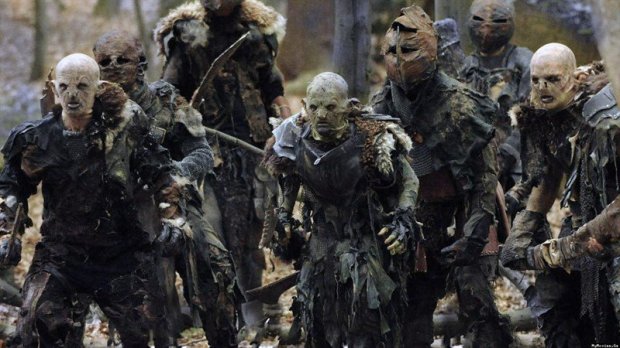
I wasn’t sure what I was going to write this week, then I heard about an American science fiction author bashing J.R.R. Tolkien as racist. When I read the article, it became even more laughable because he claimed that he was racist because of the way he portrayed Orcs as an “inferior” race.
Yes, you read that right. The greatest fantasy author of all times is a racist and a bigot because he made a make-believe race that were considered inferior by most people, i.e. those who read Tolkien and the author himself. Never in my life have I heard anything so ridiculous and self-serving. These comments seem to be coming from a man trying to sell his own books, because he sure doesn’t know what he’s talking about.
Now, before I go any further, I want to inform you that I hate political correctness. I am “old school” for lack of a better word. I don’t agree with changing words just because you don’t like them. To me, free speech is everything. If you don’t like it, then don’t read it, watch it, or listen to it. However, I hate stupidity and he’s just downright stupid.
The author (who will remain unnamed as I will not promote him in any way, shape or form) said Tolkien “depicted evil creatures such as Orcs as ‘worse than others’ and said this had ‘dire consequences for society.'” Sorry, what? Is President Trump planning to turn away immigrants because he’s afraid they’ll join the dark lord Sauron to destroy America? Gimme a break!
Okay, first you have to understand what Orcs are… They’re mostly evil. Some like Warcraft depict Orcs as neutral or evil–like some do in D&D–but most portray them as evil. It’s part of what Orcs were meant to be.
Remember, Tolkien created Orcs, so all of us fantasy authors go by his writings for reference. Beyond that, it is well known that Tolkien was one of the most staunch critics of racism, fascism, and Nazism. It is well documented in his writings.
Now, here is where he gets really, really wierd. The author says, “I can easily imagine that a lot of these people that were doing the dark lord’s bidding were doing so out of simple self preservation and so forth.” Really? I guess they killed all the humans because they were afraid of Sauron, not because humans tasted good. This quote shows me that this man never read Tolkien, and if he did, he’s trying to use today’s “PC bullshit” to justify his opinion.
Why? Why do we have to do that? Why do we need to take one of the Top 5 novels in America (as per The Great American Read) and trash it because you want to be politically correct. If you want to do that, write your own damn book about Orcs being the downtrodden of society, but to me, it’s pretty insulting comparing Orcs to South American migrants (yes, this idiot did that too!)
There is a place for criticism. I have negative reviews on my own novels, and I take them to improve myself as an author. It just seems that for this author to go after a literary legend like Tolkien is more about bringing attention to himself.
You can read the article about this author and his comments here and decide for yourself. I, for one, don’t plan on reading any of his books anytime soon.
###


Mark Piggott is the author of the Forever Avalon book series. Forever Avalon is available for purchase as a paperback/ebook at Amazon. The Dark Tides is available for purchase as a paperback/ebook at Amazon, Barnes and Noble, and iUniverse publishing. The Outlander War, Book Three of the Forever Avalon series is coming soon from Austin Macauley Publishing.

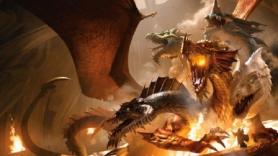 For me, these late night D&D sessions fueled an already active imagination. Combine that with missing your wife and newborn baby daughter and it can lead to some rather strange dreams. During my first deployment, I started having a recurring dream of being with my wife and daughter on an island of fantasy and magic, lost in time and space. That dream evolved and grew with each of my deployments and subsequent birth of my other children.

 I turned 54-years-old today. One more year until I qualify for a senior citizen discount. It’s sad when you think about it, but is it? I can remember turning 18 like it was yesterday.
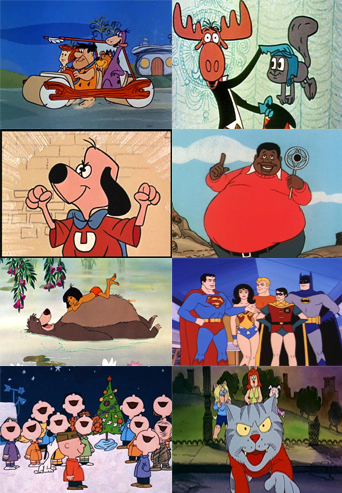 I love everything sci-fi/fantasy. I can remember reading X-Men and Superboy and the Legion of Superheroes comics in the 70s. I remember watching a wide variety of Japanese anime on UHF (if you don’t know what it is, look it up youngling) like Speed Racer, Marine Boy, Ultraman, Gigantor and others. I use to draw my favorite superheroes, cut them out, and play with them like action figures, and watch Superfriends every Saturday morning. I had all the “Glow in the Dark” monster models like Dracula, The Wolfman, and Frankenstein. I watched Hammer horror movies on late night TV, with Christopher Lee as Dracula. It was a great time to be a kid!
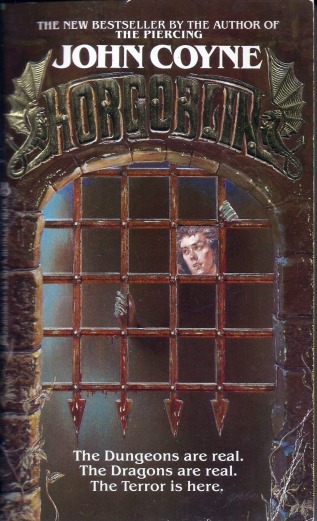 The story revolves around Scott Gardiner, a teenage boy who becomes obsessed with “Hobgoblin,” a fantasy role-playing game based on Irish mythology, as his life “in the game” and “in reality” slowly blend. Like Mazes & Monsters, Coyne treats the playing of role-playing games as indicative of deep neurotic needs, of which I can attest to from my formative years of non-stop D&D. In these books, the protagonist is, or at least appears to be, suffering from schizophrenia or some analogous condition as the attainment of mature adulthood is accompanied by the abandonment of role-playing games. Like Jaffe, Hobgoblin was published at the height of D&D‘s popularity and the intense media coverage of the “Egbert steam tunnel” incident (i.e., urban myths wherein role-playing gamers enacting live action role-playing games perish, often in the utility tunnels below their university campuses).
 My children just don’t understand my infatuation with these classics. They look at the special effects and laugh at how bad it is. True, it’s not the same as the CGI of today, but it has a quality of quasi-realism and camp that today’s movies lack. These were movies done on location and large sound stage sets, not shot completely in motion-capture or green screen, with robust orchestral music to drive the story.



 Mark Piggott | Fantasy & Steampunk Author