

Most of you don’t know about a one of the first comic strips called “The Yellow Kid” that appeared in the pages of the New York World from 1895 to 1898, and later William Randolph Hearst’s New York Journal. Created and drawn by Richard F. Outcault in the comic strip Hogan’s Alley (and later under other names as well), it was one of the first Sunday supplement comic strips in an American newspaper.
It also has a connection to the term “yellow journalism” that was used in that time period to describe the two newspapers’ editorial practices of taking (sometimes even fictionalized) sensationalism and profit as priorities in journalism. Today, we seem to be returning to that same kind of “sensationalism” in journalism.
Now, I’m not trying to say that the press are “the enemy of the people” but a lot of them are partisan in their reporting. That fact is undeniable, and not what journalism should be. When you have websites and organizations dedicated to “fact checking” the media, you know something is wrong.
I have some experience in this matter. I spent more than 30 years in military journalism and public affairs, having one-on-one interactions with the media. I found most of them to be driven by the story, and not looking for that “gotcha” moment. That agenda has done a complete 180° by today’s standards.
“A key purpose of journalism is to provide an adversarial check on those who wield the greatest power by shining a light on what they do in the dark, and informing the public about those acts.”–Glenn Greenwald
That is what journalism is supposed to be, but I stead we get stories with little to no facts being published. It’s done to be the first to get it out, not be accurate. Then, when those stories are proven wrong, the editors publish an update or retraction, but the false story is already out there. By the time the retraction is posted, the inaccurate story has been retweeted, shared, and sent out hundreds, maybe thousands, of times while the retraction gets little to no puah.
This is why the media has become so untrustworthy. They are driven by agendas, not facts. That’s not what journalism is supposed to be.

If you want to see what journalism was meant to be, watch the 2005 movie “Good Night and Good Luck” starring David Strathairn as Edward R. Murrow. The movie surrounds the infamous hearings of Senator Joseph McCarthy surrounding communism in our country. When I watch this movie, it saddens me that we don’t have journalists like Murrow in the media today. Today’s journalists act more like wanna-be celebrities than journalists. Add to that, anyone with a social media account, blog, or just a smartphone tries for their “15 minutes” of fame. Its shameful and most of the time quite inaccurate.
“I think journalism gets measured by the quality of information it presents, not the drama or the pyrotechnics associated with us.”–Bob Woodward
As writers–whether or not you’re a journalist–we have a responsibility for accuracy in our words. Even writing fantasy stories, as I do, I strive for accuracy by researching the myths and legends I use in my novels. People who read my stories expect it, just as we should expect it from the media today.
###
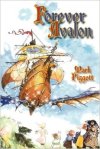
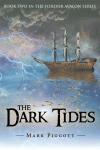
Mark Piggott is the author of the Forever Avalon book series. Forever Avalon is available for purchase as a book/ebook at Amazon. The Dark Tides is available for purchase as a book/ebook at Amazon, Barnes and Noble, and iUniverse publishing. The Outlander War, Book Three of the Forever Avalon series is coming soon from Austin Macauley Publishing.
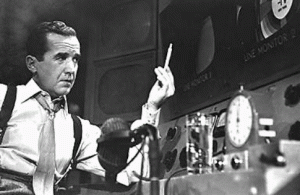 The media are supposed to be the sentinels of the truth. They investigate, question and report on the activities of the government to keep the people abreast of what our public officials are doing. There is no better example of that than Edward R. Murrow (1908-1965). His reporting style focused on facts, not on sensationalism. He never made the story about himself, even when he was pulled into it. One of the best journalism movies out there is George Clooney’s “Good Luck and Good Night” from 2005. It should Murrow’s reporting during the “Red Scare” hearings by Senator Joe McCarthy. You can see the same great examples of journalism in movie’s like “Spotlight” and “All the President’s Men” as well. It doesn’t matter who is in power in Washington, D.C.
 People say that the Vietnam War was lost when the government lost Walter Cronkite. During a trip to Vietnam in 1968, he said, “It seems now more certain than ever that the bloody experience of Vietnam is to end in a stalemate.” That one sentence told the American people that the war was not winnable and, by most accounts, turned many against continuing the campaign. It is said that President Lyndon Johnson was heard to say, “If I’ve lost Cronkite, I’ve lost middle America.” That is the power of journalism.
 Mark Piggott | Fantasy & Steampunk Author