Stop trying to justify “political correctness” by bashing fantasy classics

I wasn’t sure what I was going to write this week, then I heard about an American science fiction author bashing J.R.R. Tolkien as racist. When I read the article, it became even more laughable because he claimed that he was racist because of the way he portrayed Orcs as an “inferior” race.

Yes, you read that right. The greatest fantasy author of all times is a racist and a bigot because he made a make-believe race that were considered inferior by most people, i.e. those who read Tolkien and the author himself. Never in my life have I heard anything so ridiculous and self-serving. These comments seem to be coming from a man trying to sell his own books, because he sure doesn’t know what he’s talking about.

Now, before I go any further, I want to inform you that I hate political correctness. I am “old school” for lack of a better word. I don’t agree with changing words just because you don’t like them. To me, free speech is everything. If you don’t like it, then don’t read it, watch it, or listen to it. However, I hate stupidity and he’s just downright stupid.

The author (who will remain unnamed as I will not promote him in any way, shape or form) said Tolkien “depicted evil creatures such as Orcs as ‘worse than others’ and said this had ‘dire consequences for society.'” Sorry, what? Is President Trump planning to turn away immigrants because he’s afraid they’ll join the dark lord Sauron to destroy America? Gimme a break!

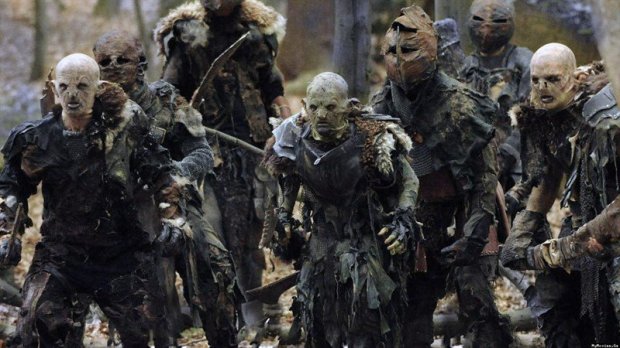
Okay, first you have to understand what Orcs are… They’re mostly evil. Some like Warcraft depict Orcs as neutral or evil–like some do in D&D–but most portray them as evil. It’s part of what Orcs were meant to be.

Remember, Tolkien created Orcs, so all of us fantasy authors go by his writings for reference. Beyond that, it is well known that Tolkien was one of the most staunch critics of racism, fascism, and Nazism. It is well documented in his writings.

Now, here is where he gets really, really wierd. The author says, “I can easily imagine that a lot of these people that were doing the dark lord’s bidding were doing so out of simple self preservation and so forth.” Really? I guess they killed all the humans because they were afraid of Sauron, not because humans tasted good. This quote shows me that this man never read Tolkien, and if he did, he’s trying to use today’s “PC bullshit” to justify his opinion.

Why? Why do we have to do that? Why do we need to take one of the Top 5 novels in America (as per The Great American Read) and trash it because you want to be politically correct. If you want to do that, write your own damn book about Orcs being the downtrodden of society, but to me, it’s pretty insulting comparing Orcs to South American migrants (yes, this idiot did that too!)

There is a place for criticism. I have negative reviews on my own novels, and I take them to improve myself as an author. It just seems that for this author to go after a literary legend like Tolkien is more about bringing attention to himself.

You can read the article about this author and his comments here and decide for yourself. I, for one, don’t plan on reading any of his books anytime soon.

###

SKU-000941753

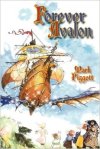
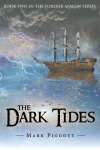
Mark Piggott is the author of the Forever Avalon book series. Forever Avalon is available for purchase as a paperback/ebook at Amazon. The Dark Tides is available for purchase as a paperback/ebook at Amazon, Barnes and Noble, and iUniverse publishing. The Outlander War, Book Three of the Forever Avalon series is coming soon from Austin Macauley Publishing.
What language does one use when casting spells?

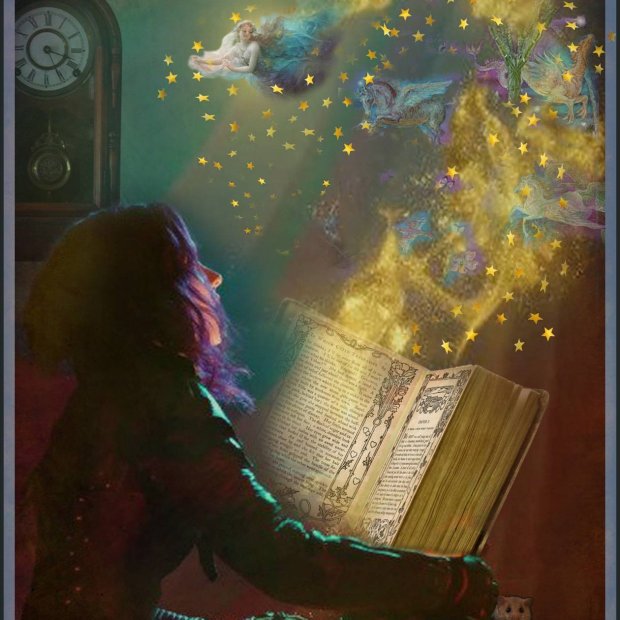
Magic spells are the “bread and butter” of any fantasy author. There isn’t a person out there doesn’t know words like “Expecto Patronum” or “Avada Kedavra” and what they can do. The power behind d the magic is in the words. The question is, what words do you use to enchant those spells.

When I first started writing Forever Avalon, I had to come up with a plan since, in my world, everyone could use magic in some form or another. The world of Avalon came from our world, so the easiest think to use was one of the oldest languages of man… Latin.

It made sense to me to use. It is one of the oldest languages in human used, known across multiple cultures. Why not make it a source for magic. Besides, between Google translate and a great online program through the University of Notre Dame, it was easy to use.

Unfortunately, my new story is taking me in a whole new direction. After I finished book four of the Forever Avalon series, I started planning book five, when I got an idea for another series. This would take place in a whole new fantasy world, completely original. So now, I needed another language for magic.

I’m not a linguist, so it’s hard enough doing Elf, Dwarf and other verbiage in my stories. For example, I use Norwegian and German for the Dwarf language, since those countries are where the legends come from. But to create something new for magic, I used a shortcut again. Hello Google Translate.

This time I went on a different direction… to Corsica. According to Wikipedia, “Corsica is an island in the Mediterranean Sea and one of the 18 regions of France. It is located southeast of the French mainland and west of the Italian Peninsula, with the nearest land mass being the Italian island of Sardinia to the immediate south. A single chain of mountains makes up two-thirds of the island.”

I picked Corsican for the language of magic in my new story because it seemed to flow properly, especially for single word spells. It’s closely related to a the medieval language of Tuscan (Toscano) which fits with a medieval fantasy world. In addition, I created a whole new style of magic casting along with it. You see, I figured spells could be cast using long, drawn out phrases as well as single words of power. This gives the magic caster options for how powerful they want their spell to be. For single words, I use Corsican for the spells. I have to be a little creative in the long phrase spells, mixing a little bit of poetry with my magic. For example, this is a concealment spell in my new story:

“Whispers in the darkness, silent as the wind, bend the light to my will; Cast your shadow around me, hide me from my enemy, conceal me while I remain still.”

It’s not my best prose, but magic is coming from a different plane. You are talking about something of complete fantasy and trying to make it real is what a writer is supposed to do. It’s times like this I wish I had the linguistic skills of a J.R.R. Tolkien.

###

51nd6H6sATL._SY344_BO1,204,203,200_

SKU-000941753

Mark Piggott is the author of the Forever Avalon book series. Forever Avalon is available for purchase as a book/ebook at Amazon. The Dark Tides is available for purchase as a book/ebook at Amazon, Barnes and Noble, and iUniverse publishing. The Outlander War, Book Three of the Forever Avalon series is coming soon from Austin Macauley Publishing.
Authors have always been at the forefront when it comes to race relations

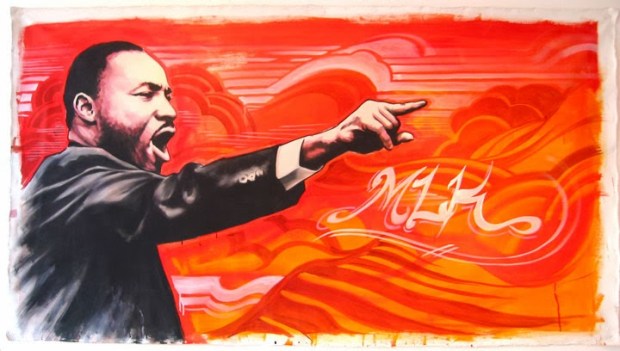
MLK

Today we honor the legacy of Dr. Martin Luther King, Jr., and the voice he brought to equality, race relations, and civil rights. I was only a baby when Dr. King was alive, but I remember his influence growing up in the 70’s. I was a military brat, raised in a very strict environment, but race was never an issue with me.

One of my best friends in elementary school was African-American. I don’t remember his name, but I do remember him. We connected through our love of comic books. We would both draw our favorite superheroes during our spare time in class. We even cut them out and played with them like action figures.

I think that was the key to my “education” on race relations. In the comics, especially for the superheroes, race was not an issue. Captain America teamed up with the Falcon. The X-Men has heroes that were black, blue, Native American, etc. The best example from the 70’s was the Legion of Superheroes. The covered every race, religion, creed, and color imaginable and always fought for the greater good.

That’s what’s great about comics. They have always represented the best and worst of us, and always showed how good triumphs over evil. Comics teach us that it’s okay to be different, and that we should work together for the benefit of the planet.

Unfortunately, things haven’t changed since Dr. King’s “I have a dream” speech. We are still divided, not united, by race. People still use labels for self-identity, persecution, hate speech,and even violence. We are not being “judged by the content of our character, not the color of our skin.”

I’m not going to get political here, pointing fingers at the left or the right. There are people guilty on all sides that are using race to perpetuate an idea or political power, and that’s wrong. We have to get beyond the name calling and find that middle ground. We can’t move forward if we’re not working toward a common goal.

Dr. King said, “Darkness cannot drive out darkness; only light can do that. Hate cannot drive out hate; only love can do that.” As writers, we have the responsibility to bring out the light and drive out the darkness through our stories. Stories emulate what’s going on in the world around them, i.e. The Jungle, To Kill a Mockingbird, Grapes of Wrath, etc. This trend has to continue, even more so today.

Legolas_and_Gimli_arrive_in_Valinor

Even in fantasy stories, there are issues of race. The animosity between Dwarves and Elves is a great example. Although you really can’t compare that to the real world, it’s speaks to the heart and soul of the issue. J.R.R. Tolkien, was keen on representing animosity and friendship throughout the Lord of the Rings books.

Gimli Glóin’s son is renowned, for he was one of the Nine Walkers that set out with the Ring; and he remained in the company of King Elessar throughout the War. He was named Elf-friend because of the great love that grew between him and Legolas, son of King Thranduil, and because of his reverence for the Lady Galadriel […] But when King Elessar gave up his life Legolas followed at last the desire of his heart and sailed over Sea […] We have heard tell that Legolas took Gimli Glóin’s son with him because of their great friendship, greater than any that has been between Elf and Dwarf. If this is true, then it is strange indeed: that a Dwarf should be willing to leave Middle-earth for any love, or that the Eldar should receive him, or that the Lords of the West should permit it. But it is said that Gimli went also out of desire to see again the beauty of Galadriel; and it may be that she, being mighty among the Eldar, obtained this grace for him.

— The Return of the King, Appendix A: Annals of the Kings and Rulers

I’m not trying to compare race relations in a fantasy story to the real-world issues today. What I’m trying to say is before you let that hate and frustration fill your heart, before your type that profanity-laced rant on Twitter or Facebook, remember this … Be a part of the solution, not a part of the problem.

# # #

51nd6H6sATL._SY344_BO1,204,203,200_SKU-000941753Mark Piggott is the author of the Forever Avalon book series. Forever Avalon is available for purchase as a book/ebook at Amazon. The Dark Tides is available for purchase as a book/ebook at AmazonBarnes and Noble, and iUniverse publishing. The Outlander War, Book Three of the Forever Avalon series is coming soon.