As I work with my editor to get The Outlander War ready for publication, I am looking ahead to my next project. To be honest, I am planning to continue the story of the Gil-Gamesh and the MoonDrake family on Avalon with another trilogy, but I wanted to step away for a second. I wanted to try a science fiction adventure, specifically a STEAMPUNK adventure.
I have always been fascinated by the steampunk genre, from the Victorian sensibilities to the wild, gear-driven, steam-powered inventions. It reminds me so much of Jules Verne and his fantastic novels, which is why I decided to write this story. So, without any further adieu, I present to you the prologue for my next story, “The Adventures of Corsair and the Sky Pirates: Uriel’s Flame” on Inkitt.
* * *
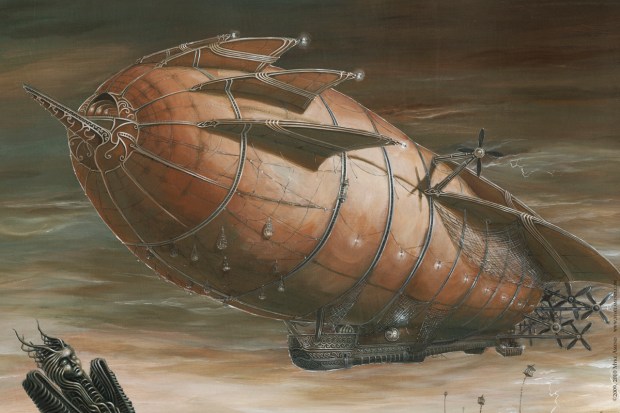 Imagine that Jules Verne, the prophet of science fiction, and Nikola Tesla, the genius inventor, had met. What would the world be like? Steam-powered machines like you’ve never seen before, bringing about a new age of science and industry, and bringing the world one step closer to war. In this age of modern mechanical marvels, the wealthy have gotten richer off the backs of workers, toiling in the factories all around the globe to produce these wondrous inventions. The only person standing up for the people is the infamous Corsair and his Sky Pirates. In his dirigible, the Arkaroo, Corsair searches the globe for the source of power for these incredible machines… Uriel’s Flame. Meteor fragments from a passing comet provides unlimited power for these steam-powered, modern marvels. Whomever controls Uriel’s Flame controls the main source of power in the world, leading countries to the brink of war. The Edison/Roentgen/Fulton, or ERF, Corporation is searching far and wide for the meteors, giving them complete control of this valuable mineral. It’s up to Corsair and his Sky Pirates to stop them and prevent a world war from impacting the world.
* * *
1887 in the city of Amiens, France. The port city in northern France was not the bustling seaport it appeared to be, but rather a quiet, little community divided by the Somme River. It’s home to one of the largest cathedrals in France and one of the world’s greatest authors.
At a small café in Quartier St.-Leu, Jules Verne sipped quietly on his coffee as he sifted through the newspaper. Verne enjoyed the quiet moments like this. It helped to clear his mind and arrange his thoughts for the next adventure.
You wouldn’t know by looking at this quiet, little man that he was such a renowned author. His white hair and beard match the wrinkles on his face. He rubbed his left leg, hoping to relieve the pain. It still ached where his nephew, Gaston, shot him. The poor boy, locked away in an asylum, with little to no explanation as to why he did it.
The pain was a constant reminder to Verne… a reminder of his own mortality, and it scared him. He left behind a legacy in his stories of science and adventure, but was it enough, he wondered? Do these ‘flights of fancy’ mean anything beyond the pages on which it was written?
“Pardon moi, monsieur,” came a voice, startling Verne. “Are you Jules Verne?”
He looked up from his newspaper to see a tall, lanky young man standing next to him. He bowed slightly, a bowler hat rested in his hand over his heart. Through his burly mustache and thick accent, Verne knew the young man had to be from Eastern Europe. His dark clothes reminded Verne of an undertaker. He hoped that was not the case.
“Oui, may I help you?” Verne asked.
“I am Nikola Tesla,” he said. “I am a great admirer of your work, Monsieur Verne. I apologize for interrupting you, but your housekeeper said I might find you here. I was hoping I could have a moment of your time.”
Verne thought for a moment before nodding and motioning for him to sit down. Tesla was overjoyed as he sat in the chair across from Verne. Before he could say anything, the waiter came over to the two men.
“Voulez-vous un café, monsieur?” he asked Tesla.
“Oui, merci?” he replied. “Et un verre d’eau s’il vous plait.” Tesla waited for the waiter to depart before he said anything, but Verne spoke first.
“From your accent, I can assume you are from Eastern Europe, Monsieur Tesla. Austria or Hungary, am I correct?” Verne inquired.
“Serbia, Monsieur Verne, but it is part of the Austro-Hungarian Empire, so you are quite correct.”
“And what brings you to Amiens? Surely you did not come here just to get my autograph?” Verne quipped.
“Non, Monsieur…” Tesla stated, but stopped while the waiter brought over his coffee and set it down in front of him before leaving. “I work for the Continental Edison Company. I was sent here to work on your cities electrical system. I thought I might get the chance to speak with you before I return to Paris.”
“Edison, well, I must thank you for the electric lights,” Verne commended. “It is better than writing by candlelight at three in the morning.”
Tesla smiled and nodded in appreciation of the compliment. “Thank you, Monsieur Verne. Perhaps I can inspire you in another way,” Tesla remarked as he pulled out a folded piece of paper from his coat and handed it to Verne.
“What is this?” he asked. “I thought you weren’t looking my autograph.”
“No, no … this is something that your words inspired me to create.”
Verne’s curiosity was peaked as he unfolded the paper. When he saw what was inside, his eyes grew as large as hen’s eggs. It was an engine, one so complicated in design that Verne could not understand the intricacies of what he was looking at. Around the engine was a crude drawing of a ship, a submersible ship that resembled his description of the Nautilus from his novel, 20,000 Leagues Under the Sea.
“Incroyable,” Verne whispered, amazed at what he saw. “What is it?”
“A steam-powered oscillating electric generator,” Tesla explained. “It can generate 20 times the electrical power of anything today, maybe more. This could power a ship, like your Nautilus, don’t you think?”
“Indeed … indeed it could, but it would take a ton of coal just to generate the amount of steam you would need for such an engine, wouldn’t you agree?”
“Yes, but not with this,” Tesla said as he reached into his pocket and pulled out a small test tube. Inside were a few small blue stones that glowed slightly. He handed it to Verne, who stared at them in awe.
“What on Earth are they?” Verne asked.
“They’re from a meteor that fell near my home in Serbia,” Tesla began to explain, until the waiter stepped up and brought him his coffee and a glass of water, as he requested. He waited until the waiter departed to continue his explanation. “It generates a constant heat that never seems to die out. Here, observe…”
Tesla took the cork off the test tube vial and poured out one small meteorite into the glass of water. The blue rock began to bubble and burn, raising the temperature of the water quite rapidly. Soon, the water was boiling as steam arose from the glass. Tesla took a spoon and pulled out the tiny rock before dropping it on the table.
“You can pick it up, Monsieur, it won’t burn you.”
Verne reached down and tentatively touched it with his fingertips, until he realized how cool the rock was and he picked it up and held it in his hand. “Monsieur Tesla, this is quite, well… Remarquable!”
“It burns on and on, without any reduction in size or mass,” Tesla boasted proudly. “It could change the world of science and industry as we know it.”
“Is there any more of this meteor?” Verne asked. “Where does it come from?”
“I have a colleague at the Royal Astrological Society who discovered a comet he named Uriel, after the archangel,” Tesla explained. “Fragments from Uriel are impacting the Earth from the Urals to the Alps and across North America as the comet passes by. We are working on a method to detect the fragments of meteorite. So far, I’ve collected nearly 500 kilograms.”
“You are an incredibly talented young man, Monsieur Tesla,” Verne said as he handed him the meteor, dropping it in the tube. Verne then folded the paper and handed it back. “But, what does this have to do with an old man like me? I am a writer, not a scientist.”
“Your stories have inspired me to pursue new avenues of science,” Tesla said. “I would like to collaborate with you on some ideas that I have. I have the scientific knowledge, you have an incredible imagination. Perhaps, together, we can bring about a new age of science and technology.”
“Won’t that interfere with your work at the Edison Company?” Verne asked.
“I have already put in my notice to leave my position with Edison,” Tesla explained. “I am planning to go to the United States to pursue my own dreams, but I wanted to work with you before I go.
“Besides, I don’t want my ideas to come under an Edison patent instead of my own. Something like this,” he said, shaking his design at Verne, “could change the course of human history. It just needs a little imagination to make it come true. You, Monsieur Verne, are a master of imagination. Imagine what we could accomplish together?”
Verne sat there, intrigued by the young man’s offer. For the first time, he saw how his novels can influence the future of mankind. “Very well, Monsieur Tesla. Where do we begin?”
# # #
 Mark Piggott is the author of the Forever Avalon book series. Forever Avalon is available for purchase at Amazon and Barnes and Noble. The Dark Tides is available for purchase at Amazon, Barnes and Noble, and iUniverse publishing. The Outlander War, Chapter 3 of the Forever Avalon series is coming soon.
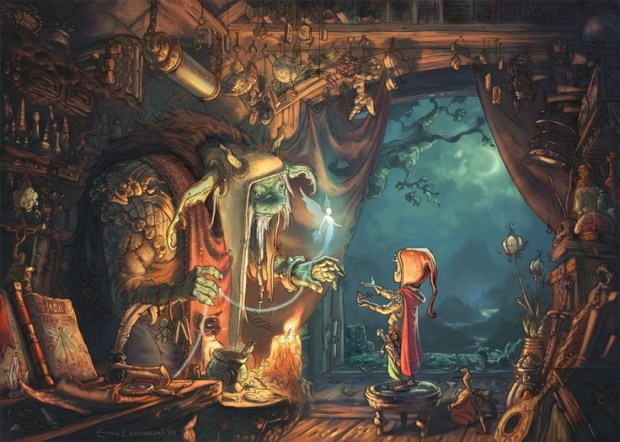 Magic vs. Science has been a question that fantasy and sci0fi writers have been pondering for quite a long time. The usual trope involves people using science in an under developed country which, to them, seems like magic. I’ve seen this used on episodes of Star Trek, Doctor Who, and various other television shows and movies. It is even considered “one and the same” in the Marvel Cinematic Universe (MCU) as told in Thor.
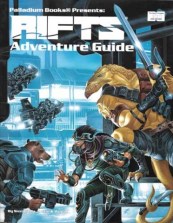 I remember an old Role Playing Game (RPG) I played back in the 80’s (no jokes or comments about my age please) called Rifts. The backstory involved a post-apocalyptic Earth where the ley lines have unlocked dimensional rifts, the rebirth of magical creatures in our modern world, along with the reemergence of mysterious locations like Atlantis, Lemuria, and other mythical places. I remember this picture in the player’s guide of an Elf, wearing cyber-punk tech, trying to hack into a computer. It really covered all angles of magic/technology. That’s the type of genre convergence I like to see.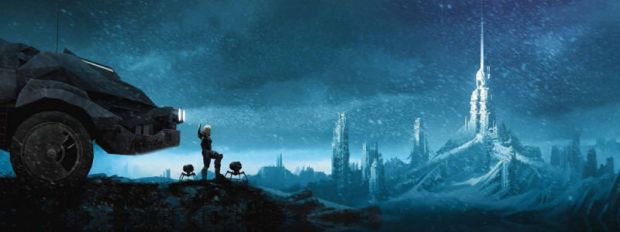
 It strange how right, and sometimes how wrong, science fiction has been. I remember watching Lost in Space on TV as a kid. The Jupiter 2 mission was supposed to have taken place in 1984. Granted, that prophetic vision didn’t come true, but it was something that stuck in the memory of an impressionable child.
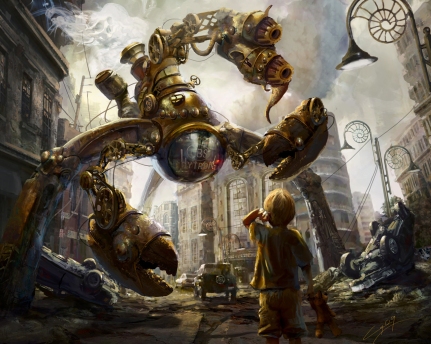 Steampunk is defined as “a genre of science fiction that has a historical setting and typically features steam-powered machinery rather than advanced technology.” To me, it’s more than modern technology with a Victorian twist. This genre has been on the rise with its push in video games with the award winning Bioshock franchise, TV series like Steampunkd, and in books, starting with the Godfather of Steampunk, Jules Verne, to authors like Cherie Priest and Michael Moorcock.
 Mark Piggott | Fantasy & Steampunk Author