 Magic vs. Science has been a question that fantasy and sci0fi writers have been pondering for quite a long time. The usual trope involves people using science in an under developed country which, to them, seems like magic. I’ve seen this used on episodes of Star Trek, Doctor Who, and various other television shows and movies. It is even considered “one and the same” in the Marvel Cinematic Universe (MCU) as told in Thor.
Science or magic? Or both, for that matter. Anime has a penchant for using magic to power technology, i.e. Knights and Magic, Tenchi Muyo: War on Geminar, The Irregular at Magic High School, and In Another World with my Smartphone, just to name a few. I love to see magic used in this way, it really has a cyber-punk/steampunk feel to it.
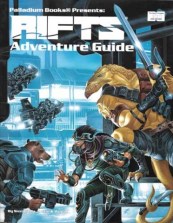 I remember an old Role Playing Game (RPG) I played back in the 80’s (no jokes or comments about my age please) called Rifts. The backstory involved a post-apocalyptic Earth where the ley lines have unlocked dimensional rifts, the rebirth of magical creatures in our modern world, along with the reemergence of mysterious locations like Atlantis, Lemuria, and other mythical places. I remember this picture in the player’s guide of an Elf, wearing cyber-punk tech, trying to hack into a computer. It really covered all angles of magic/technology. That’s the type of genre convergence I like to see.
The way to think about this is as a source of energy. Magic is, in all practical purposes, energy. You can call it mana, psions, or PPE (Potential Psychic Energy per Rifts), it’s still magic. Spells allow magicians, mages, magic casters, etc., to manipulate this energy through spells. In some ways, the use of technology gives the wizards a way to cast their spells faster, more accurate, and more powerful than traditional casting.
The best example for this is in the anime The Irregular at Magic High School. I know, I talk a lot about anime in my blogs, but that’s really to the broad range of genres they use. Anyway, in this anime, magical power is measured in psions or “thought particles” and use Casting Assistance Devices, or CADs, to make it easier to cast certain spells. The CADs are preprogrammed with spells that allows the caster the ability to use spells in rapid succession.
In the movies, the MCU has changed the way we look at mythology. The Asgardians in Thor use magic and science in the same breath. The ability to access this energy lies in their immortal life. When Thor first appeared in the comics, it was told as the ancient Gods coming to the modern age, nothing more. This was retold when the MCU was created and it made so much more sense. These are not beings born of magic, but a race of inter-dimensional beings who used magic to power their science.
“Your Ancestors Called it Magic, but You Call it Science. I Come From a Land Where They Are One and the Same.” — Thor Odinson, Thor
It’s a fine line to walk, especially as a writer. With magic, you can do practically anything in your stories. Magic is an unpredictable and wide-ranging power. However, when it comes to science, anything you create or imagine, you need to base it in science. Think about Star Trek. When the late, great Gene Roddenberry created his series, he wanted to base the technology on practical science. He even spoke with physicists and other scientists to ensure he was basing his stories on what technology in the future could be. I mean, from Star Trek, we got cell phones, digital music and movies, and other tech we see today… And it only took less than 50 years to go from science fiction to science fact.
Steve Jobs once noted that his inspiration for the iPod came from an episode of Star Trek: The Next Generation where music was played by the computer. This is how writers can inspire. Think back to Jules Verne. From 20,000 Leagues Under the Sea to From the Earth to the Moon, submarines and rockets became a reality. Although, I’m still waiting for my H.G. Wells time machine.
As writers, we can let our imagination go and create anything and everything possible. Whether it be science or magic, or both… Use whatever you can to bring your story to life.
# # #
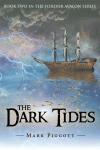 Mark Piggott is the author of the Forever Avalon book series. Forever Avalon is available for purchase as a book/ebook at Amazon. The Dark Tides is available for purchase as a book/ebook at Amazon, Barnes and Noble, and iUniverse publishing. The Outlander War, Book Three of the Forever Avalon series is coming soon.
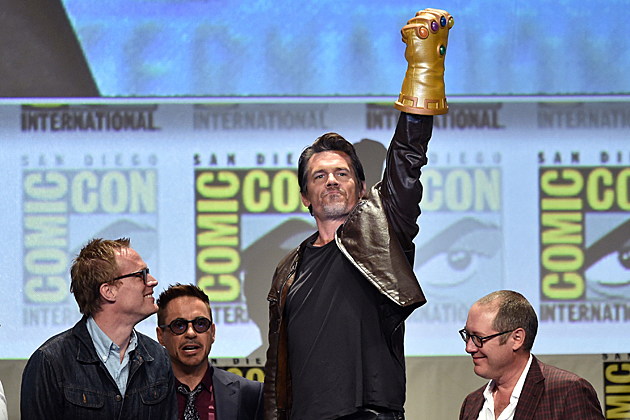 The hype is nearly over. Avengers: Infinity War, the culmination of 10 years and 18 major motion pictures, is arriving on the big screen April 27. Most fans of Marvel Comics and the Marvel Cinematic Universe (MCU) knew this day was coming since we saw Thanos’ grinning face at the end of The Avengers and seeing Josh Brolin raise the Infinity Gauntlet at San Diego Comic-Con. If you don’t have the time to watch 18 Marvel movies in one sitting, then here are five “must see” Marvel movies that will help explain the basics of the MCU and lead you into the Infinity War.
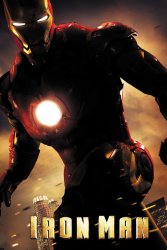 IRON MAN (2008) — This is the movie that started it all. Sure, their were plenty of previous films that carried the Marvel name, but for the MCU, this is it. There really is nothing better than watching Tony Stark create his armor from scratch and, after all non-stop action, see Samuel L Jackson’s Nick Fury talk about the “Avengers Initiative” with him. I still love watching this movie, especially the first fight he has in Gulmira; and, to be honest, this movie shows why Robert Downey Jr. is the heart of all of the MCU characters. He really embodies Tony Stark like no other. Like I said, it’s always best to start at the beginning.
 GUARDIANS OF THE GALAXY (2014) — Although there were other movies (Thor: The Dark World, Captain America: Winter Soldier) that were excellent movies and do play an important role in the MCU but Guardians introduces another Infinity Stone… The Power Stone. Yes, Thor: The Dark World also introduces one of the stones… The Reality Stone, but its not a great movie and it actually confuses the issue. Guardians is fun, entertaining, and brings us Thanos, his daughters (Nebula and Gamora) and how bad ass the Guardians are. To me, the music makes the movie so much better. It’s a soundtrack of my youth and I love it.
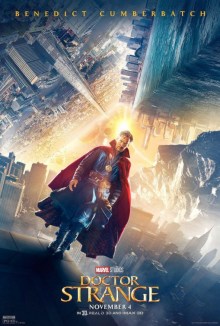 DOCTOR STRANGE (2016) — This is the movie that introduces magic to the MCU. Yes, we’ve actually seen magic before, as used by Loki in the Thor and Avengers movies, but it was never really explained. Remember, Thor told us that “in his world, science and magic are one in the same.” The Ancient One explains it even further as she brings Doctor Strange into the world of arcane arts, i.e. “channeling energy from other dimensions” and spells are like programs” according to the MCU. With all of this, we also get glimpse of the power behind the Time Stone, which lies inside the Eye of Agamotto. Even though Doctor Strange becomes quite proficient in using it, there is a reluctance to keep an Infinity Stone around his neck all the time.




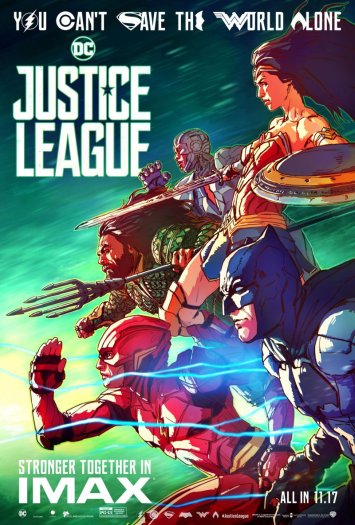 I normally don’t listen to a lot of movie critics when it comes to superhero movies, and I’ll tell you why. The majority of movie reviewers are not 100% certified comic book geeks. Additionally, those who are comic book nerds are such purists that even the tiniest of flaws ruins the movie for them. That being said…
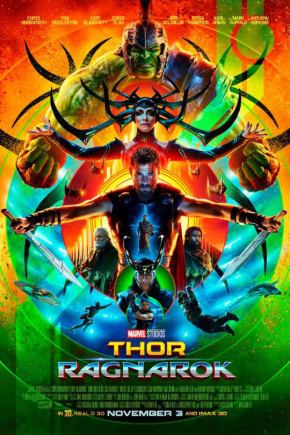 So, first up, let’s talk about Thor: Ragnarok. It was a fun and entertaining movie with some of the best fight scenes that the Thor movies are known for. At the same time, they killed three very popular characters (The Warriors Three, Volstagg, Fandral and Hogun!) and turned the Grandmaster and Skurge the Executioner into a running gag.
 The only good thing from the movie was the mid-credits scene which set up Avengers: Infinity War. By contrast, Inhumans has been laughed at and scorned with ridicule; but I’ve been watching the series since the beginning and found it enjoyable and fun to watch.
 I think Wonder Woman is one of the most inspiring characters in comics today. Since her creation in World War II, she has fought for the same values as Superman (Truth, Justice, and the American Way) while at the same time confronting the unreal stereotypes of women outside the home. Though she has been portrayed on TV by many great actresses, it took her more than 75 years to finally end up on the silver screen. In my opinion, they had to wait until Gal Gadot and director Patty Jenkins came along.
 “I am Groot!” says it all, but for those of you who don’t speak Groot, let me give you my review of Guardians of the Galaxy Vol. 2, in theaters now! I want to start out with a slight confession … I’m not a big fan of Marvel Comics’ Guardians of the Galaxy comic book series. I grew up with the original 30th Century Guardians (some of who actually make an appearance in GotG Vol. 2) of Vance Astro, Martinex, Charlie-27, Starhawk, Nikki and Yondu). The new Guardians are a mish-mash of space-spawned superheroes that have had their origins altered and/or updated for both the new continuity and the films.
 Recently, Marvel’s Vice President of Sales, David Gabriel, claimed that the company’s recent focus on creating diverse superheroes is a driving factor behind its declining comic book sales. He said, “Any character that was diverse, any character that was new, our female characters, anything that was not a core Marvel character, people were turning their nose up.”
 Mark Piggott | Fantasy & Steampunk Author