As we enter March “Like a Lion” (How about that snow!) we reach the holiest of days for Irish-Americans, alcoholics and fantasy role-players alike … St. Patrick’s Day. As such, I am reminded of a great book I read as a young adult in the 80’s. Hobgoblin by James Coyne was published in 1981 at the height of the popularity of Dungeons & Dragons. It is often compared to another novel, Mazes & Monsters by Rona Jaffe (and an equally fun movie starring Tom Hanks, believe it or not), but Hobgoblin is unique because of its Celtic mythological influence.
Hobgoblin is just a game. Ballycastle is just a house.
Scott is just a lonely teenage boy….
Until one Hallowe’en, a Hobgoblin kills everyone he loves.
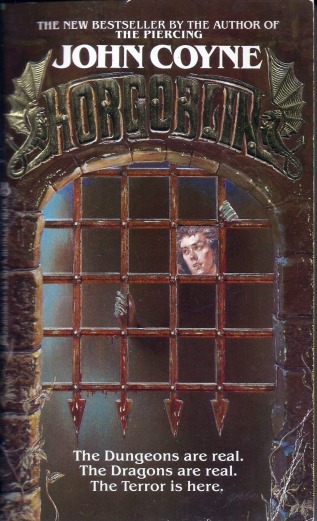 The story revolves around Scott Gardiner, a teenage boy who becomes obsessed with “Hobgoblin,” a fantasy role-playing game based on Irish mythology, as his life “in the game” and “in reality” slowly blend. Like Mazes & Monsters, Coyne treats the playing of role-playing games as indicative of deep neurotic needs, of which I can attest to from my formative years of non-stop D&D. In these books, the protagonist is, or at least appears to be, suffering from schizophrenia or some analogous condition as the attainment of mature adulthood is accompanied by the abandonment of role-playing games. Like Jaffe, Hobgoblin was published at the height of D&D‘s popularity and the intense media coverage of the “Egbert steam tunnel” incident (i.e., urban myths wherein role-playing gamers enacting live action role-playing games perish, often in the utility tunnels below their university campuses).
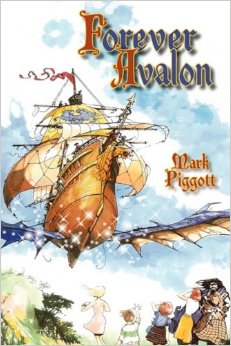
You see, I experienced some of the same when I was playing D&D. The whole “D&D will make it so you can’t distinguish from fantasy and reality” line was drilled into me constantly. Fortunately, I didn’t listen, but that’s beside the point. D&D was a great tool for me, as an author, to grow my imagination and create the world of Forever Avalon.
As for Hobgoblin, what I love about this book was how it used legends and fantasy characters from Celtic mythology. I never knew about these characters, like Brian Boru, Morrigan, and Lugh. I think it was this novel that led me to the idea in my Forever Avalon novels to bring all the different mythos together onto one magical fantasy island (no pun intended).
In researching mythology for Forever Avalon, I decided that if I was to bring all magic to one place, the mythologies were not all British, but rather from all mythological creatures around the world. Dwarves from Scandinavia and Germanic, Faeries and Elves from Ireland, Scotland and Wales, Giants from the Russian steppes, etc.
I bring this up because that’s what I learned from Hobgoblin. When I started playing D&D, the game focused on a variety of mythologies, including Greek (when it came to Clerics and the Gods they served, that is). But when we played, I think many focused on the fantasy and didn’t divide up magical creatures from this mythos or that mythos.
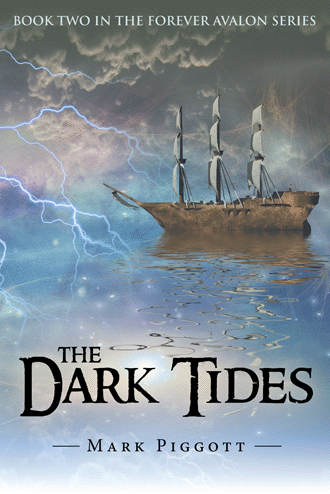
Hobgoblin showed me that myths do have a cultural and ethnic origin and we must respect those origins. For example, when I wrote The Dark Tides, I created Togo, a small island off the coast of Avalon, where the descendants of African slaves made a home for themselves. I had to research African culture and mythology, everything from Aido Hwedo, the Rainbow Serpent, and the legend of the Orisa and Eledumare. I learned so much and also how similar many myths are to each other.
When you look across multiculturalism, the stories, myths and legends have an almost universal appeal. They also have many similarities. For example, cultures around the world tell stories about a great flood. In many cases, the flood leaves only one survivor or group of survivors. For example, both the Babylonian “Epic of Gilgamesh” (ha, if you read my books you’ll understand why this is funny to me) and the Hebrew Bible tell of a global flood that wiped out humanity and of a man who saved the Earth’s species by taking them aboard a boat, i.e. the story of Noah (and not the Russell Crowe movie that absolutely bombed). Similar stories of a single flood survivor appear in Hindu mythology as well as Greek and Aztec mythology.
Our stories are what unify us as the human race. So raise a pint this St. Patrick’s Day and toast Hobgoblins, Brian Boru and all the leprechauns we’ll see after too many beers. After all, there may be another story just waiting to be told.
***
 Mark Piggott is the author of the Forever Avalon book series. Forever Avalon is available for purchase at Amazon and Barnes and Noble. The Dark Tides is available for purchase at Amazon, Barnes and Noble, and iUniverse. The Outlander War can be previewed at Inkitt.
 Mark Piggott | Fantasy & Steampunk Author