/cdn.vox-cdn.com/uploads/chorus_image/image/58696239/621407._QL80_TTD_.0.jpg)
The Multiverse… The concept that there exists alternate realities across the dimensions has been written about for years. It’s more prevalent now with the emergence of the multiverse in the Marvel Cinematic Universe (MCU) and DC television (in The Flash TV series and all their annual crossover events). The comics have done a great job of setting this concept up for us, for example DC’s latest run with “Dark Knights: Metal” and creating probably the scariest version of both Batman and The Jokers, The Batman Who Laughs. Then there’s the “Spider-verse” in Marvel Comics with everything from Spider-Gwen, Spider-Man Noir, a Spider Punk, and more. And don’t forget the sci-fi TV series Sliders, which made crossing into alternate universes a weekly episode.
“The multiverse is a theory in which our universe is not the only one, but states that many universes exist parallel to each other. These distinct universes within the multiverse theory are called parallel universes. A variety of different theories lend themselves to a multiverse viewpoint.”
The Theory of Parallel Universes for Dummies (Yes, that’s a thing!)
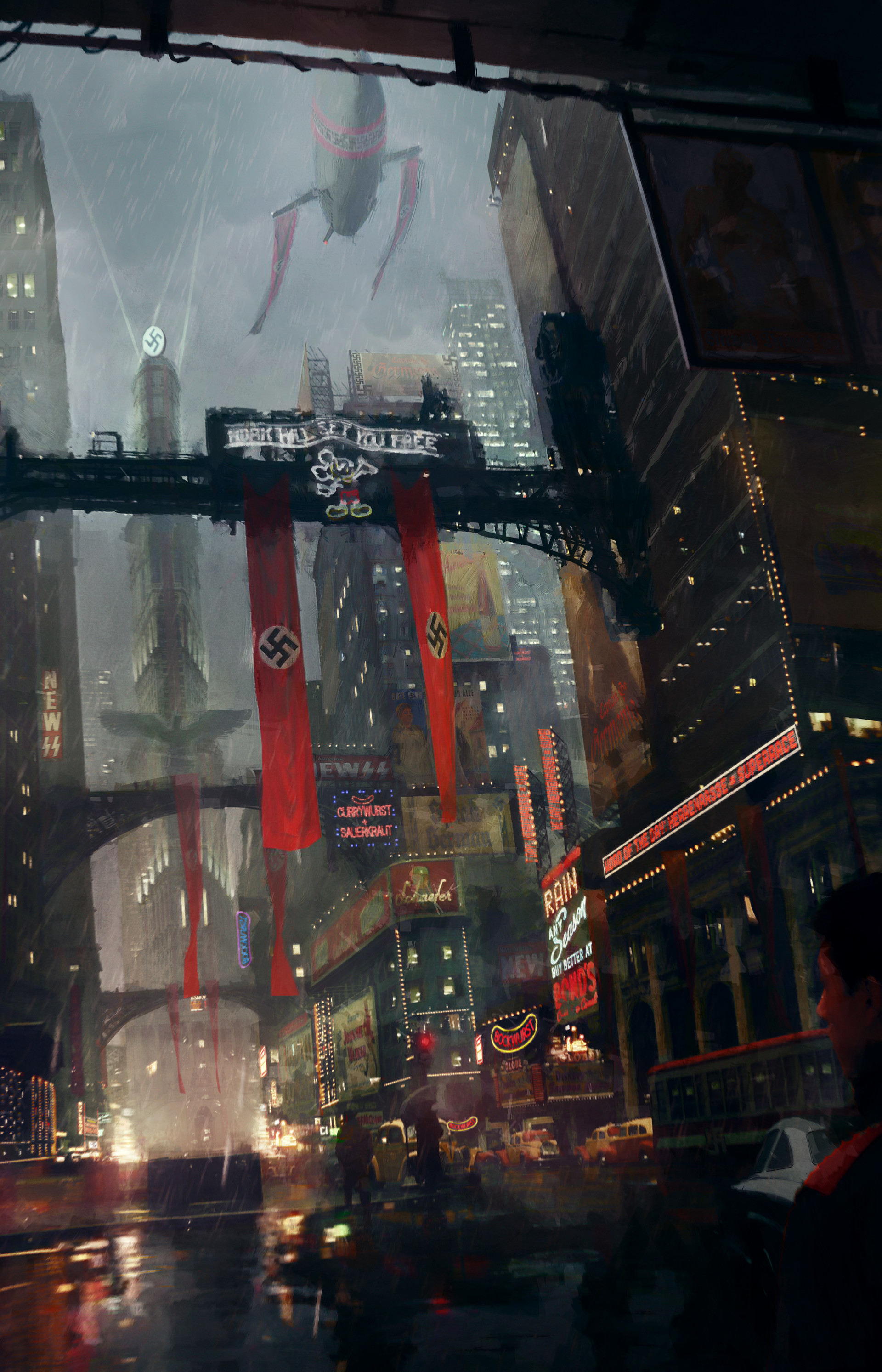
The concept is simple. One world where things are slightly different than the world we know. I like the worlds where the Nazis win and how it changes the origins of heroes as we know them: Earth-X with the kick ass Uncle Sam and the Freedom Force! That’s how to do it! But there’s so many different possibilities. That’s what makes it not only enjoyable to read and see but to create as well.
The idea of a multiverse, parallel dimensions, or alternate realities (whatever you want to call them) makes it easy for a writer to let their imagination run wild. I mean, you can create practically anything. Nothing is off limits or out of bounds in the idea of the multiverse. It takes the whole “time travel can rewrite history” concept and turns it on its head because, you’re not creating a new timeline but rather a new reality. Even scientists are now saying that the theory is more than science fiction, it’s a possibility. Think of the universe as a deck of cards…
“Now, if you shuffle that deck, there’s just so many orderings that can happen,” physicist Brian Greene says. “If you shuffle that deck enough times, the orders will have to repeat. Similarly, with an infinite universe and only a finite number of complexions of matter, the way in which matter arranges itself has to repeat.”
A Physicist Explains Why Parallel Universes May Exist, NPR.org
To me, a great example of the parallel universe if Star Trek and its “Mirror Universe” episodes. Each series did it’s own tale within the parallel universe where the Federation was a conqueror and not the benevolent organization as its portrayed in . I love the goatee Spock, bad yet still quite logical, and the scheming Sulu in all his glory. It seems all the really good alternate realities and parallel universes are the ones where the heroes become the villains. In DC, Earth-3 and the Crime Syndicate are a great example, and the “Age of Apocalypse” X-Men event in Marvel. It gives you such a unique perspective into characters we know and love.
I will admit that it has been slightly overdone lately. You see it everywhere nowadays. It’s no longer a something like Philip K. Dick’s “Man in the High Castle” where multiple realities exist, but rather, the idea that one decision creates multiple versions of yourself. However you interpret it, the possibilities are endless.
“In the many-worlds interpretation of quantum mechanics, every decision I take in this world creates new universes: one for each and every choice I could possibly make. There’s a boundless collection of parallel worlds, full of innumerable near-copies of me (and you). The multiverse: an endless succession of what-ifs.”
“Multiverse me: Should I care about my other selves?” from NewScientist
I think that comic books is the best place to see the endless possibilities of the multiverse. In Marvel, they even have their own group of heroes protecting the multiverse (The Captain Britain Corps) which is near and dear to my heart since it involves Merlin and Avalon. DC did it so perfectly with the “Elseworlds” graphic novels. “Gotham by Gaslight” is still my favorite, although “Kingdom Come” is a close second. These books take us to new possibilities and that’s always good to read. Sometimes, the stories become stale and twists like these help refresh the fruits of the imagination.

However, we need to be careful of redoing things too much. In the past 20 years, DC and Marvel both have redone their line ups and universes several times, i.e. “New 52” and “BattleWorld” for example. Yes, it has given us new versions of classic characters, but it changes so much it becomes confusing. That’s the grim reality of the multiverse idea for writers. You have millions of possibilities to create using the multiverse theorem, but what is unique about your idea and has it been done before?
World building is an essential part of the craft as a writer, especially a fantasy writer. Building a world from the ground up is one of the hardest parts of the job. The idea of the multiverse gives us the tools to create world based on our own. I’m doing that with my upcoming novel, The Last Magus: A Clockwork Heart. I created a world where a single event recreated our world as we know it into a land of magic and fantasy. It’s a reimagining of North America into something totally unrecognizable except maybe for pieces of the map. I wanted to use some names associated with cities and places in the U.S. and change others into something new. It made for an exciting challenge as I created my fantasy dystopia. I took inspiration from the great Terry Brooks for this new fantasy adventure.
So while we ponder what we would be like in hundreds of different parallel universes, let’s look at our own reality. Escapism is a good thing to have at hand, but our own reality, our own world, is always a good starting point. Take it from there and the possibilities are endless.
# # #
Mark Piggott is the author of the Forever Avalon fantasy book series. Forever Avalon is available for purchase as a paperback/ebook at Amazon. The Dark Tides: Book 2 of the Forever Avalon Series is available for purchase as a paperback/ebook from iUniverse Publishing and at Amazon, and other booksellers. The Outlander War, Book Three of the Forever Avalon series is available for purchase as a paperback/ebook from Austin Macauley Publishing, and at Amazon and other booksellers. His next two fantasy novels, The Last Magus: A Clockwork Heart and The Prometheus Engine: Book 4 of the Forever Avalon Series are being released in 2021.


 Mark Piggott | Fantasy & Steampunk Author