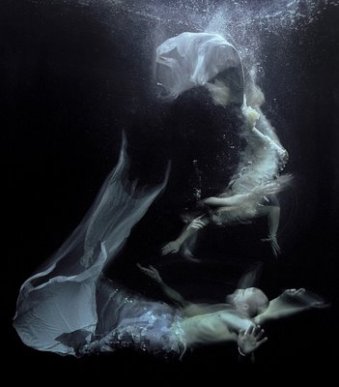
 Ralph Waldo Emerson said, “Live in the sunshine. Swim the sea. Drink the wild air.” I like the sound of that, not only as a writer but as a human being. To me, it says “enjoy life” to the fullest possible sense. It also helps to keep one’s creative juices flowing.
I will admit that I daydream a lot. I find myself dreaming about the next chapter of my novel, or captain of a spaceship, travelling to the stars. I’ve even dreamed about being a rock star while listening to my favorite music. I think that dreaming comes naturally to people with a creative talent, like writers, artists and musicians.
It’s through dreams that we create and add to the building blocks of our stories. The whole concept for Forever Avalon came from a dream I had, and each story of the series has come to me through dreams. I’ll give you an example. I’m currently writing the fourth book in the Forever Avalon series, but I’ve been stuck on this one part. For weeks, I’ve been staring at my computer with little to no results. Then one night, as I laid in bed trying to sleep, it came to me. The story just laid itself out perfectly in my mind. It was exactly what I was looking for. The only problem was that because my mind was racing with all these ideas, I couldn’t fall asleep.
“Never let it be said that to dream is to waste one’s time, for dreams are our realities in waiting. In dreams, we plant the seeds of our future.” ─ Unknown
I think that’s the curse, for lack of a better word, for writers. Our ideas can come at the most inopportune time and we don’t know how to shut it off, no matter how much sleep we lose. That does present a problem, whether at work or late at night when you’ve got to get up for work the next day. Dreaming, and daydreaming, can both be a negative and a positive for writers.
Its a part of us that lets us bust loose with incredible adventures in worlds never imagined or seen before. I wouldn’t trade all the sleepless nights and missed deadlines if I had to give up my dreams. Even the smartest people in the world want to live in their dreams.
Albert Einstein said, “If I were not a physicist, I would probably be a musician. I often think in music. I live in my daydreams in music. I see my life in terms of music.”
We need our dreams to give us something to aspire too. Those dreams are the foundation of our future. Let’s not give up those dreams, otherwise we will stay stalled in our life. I will continue to dream and grow my world through my imagination. That way, I’ll never grow old.
# # #
 Mark Piggott is the author of the Forever Avalon book series. Forever Avalon is available for purchase at Amazon and Barnes and Noble. The Dark Tides is available for purchase at Amazon, Barnes and Noble, and iUniverse publishing. The Outlander War, Chapter 3 of the Forever Avalon series is coming soon.
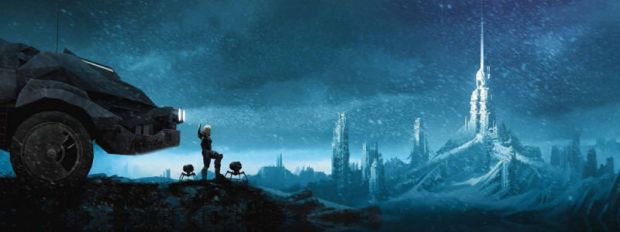
 It strange how right, and sometimes how wrong, science fiction has been. I remember watching Lost in Space on TV as a kid. The Jupiter 2 mission was supposed to have taken place in 1984. Granted, that prophetic vision didn’t come true, but it was something that stuck in the memory of an impressionable child.
 Mark Piggott | Fantasy & Steampunk Author