From Marvel to DC to anime, the idea of parallel dimensions is a great tool for writers

Dark Nights: Metal — the DC Universe of your wildest nightmares - Polygon

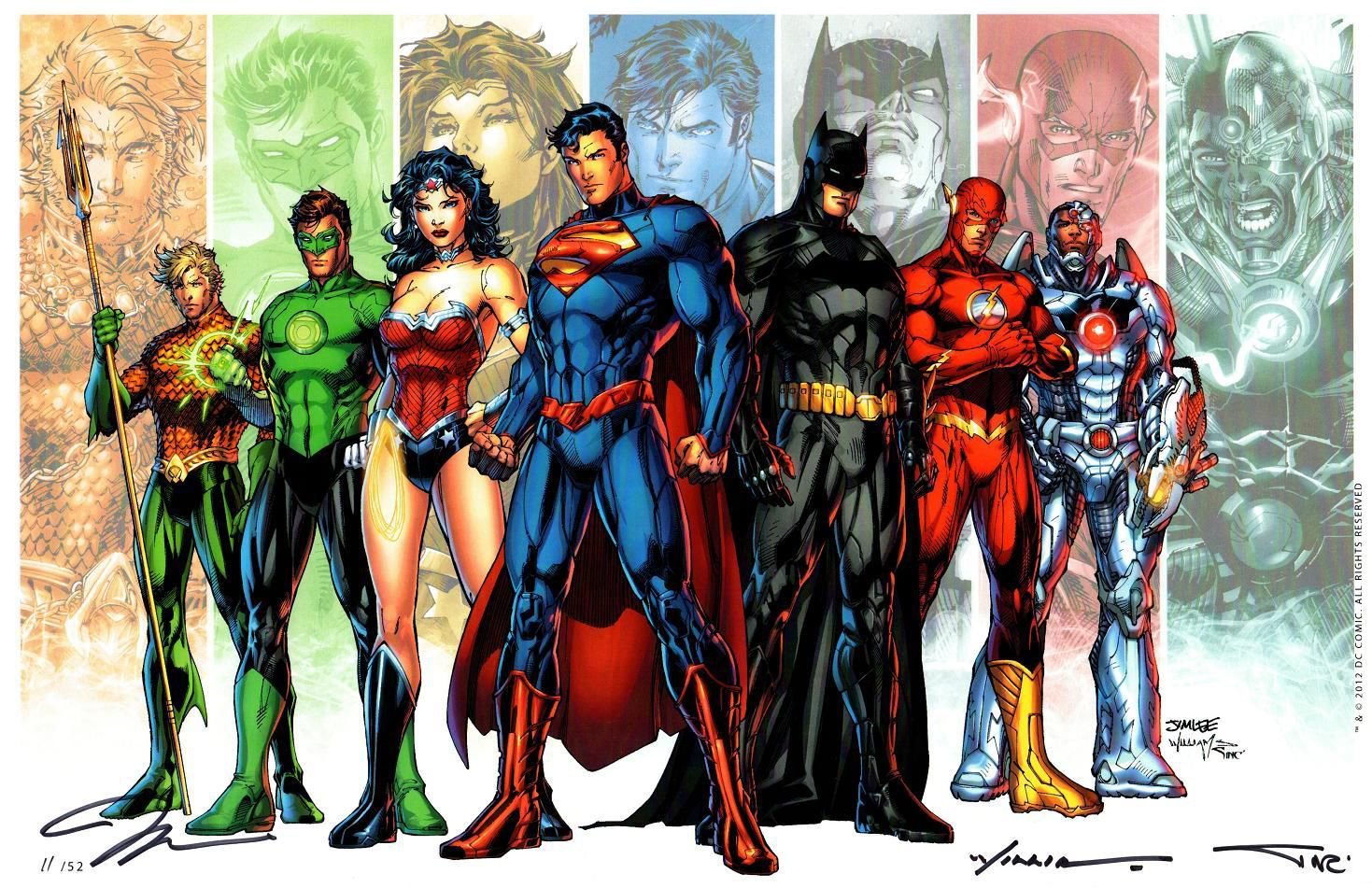
The Multiverse… The concept that there exists alternate realities across the dimensions has been written about for years. It’s more prevalent now with the emergence of the multiverse in the Marvel Cinematic Universe (MCU) and DC television (in The Flash TV series and all their annual crossover events). The comics have done a great job of setting this concept up for us, for example DC’s latest run with “Dark Knights: Metal” and creating probably the scariest version of both Batman and The Jokers, The Batman Who Laughs. Then there’s the “Spider-verse” in Marvel Comics with everything from Spider-Gwen, Spider-Man Noir, a Spider Punk, and more. And don’t forget the sci-fi TV series Sliders, which made crossing into alternate universes a weekly episode.

“The multiverse is a theory in which our universe is not the only one, but states that many universes exist parallel to each other. These distinct universes within the multiverse theory are called parallel universes. A variety of different theories lend themselves to a multiverse viewpoint.”

The Theory of Parallel Universes for Dummies (Yes, that’s a thing!)

The concept is simple. One world where things are slightly different than the world we know. I like the worlds where the Nazis win and how it changes the origins of heroes as we know them: Earth-X with the kick ass Uncle Sam and the Freedom Force! That’s how to do it! But there’s so many different possibilities. That’s what makes it not only enjoyable to read and see but to create as well.

The idea of a multiverse, parallel dimensions, or alternate realities (whatever you want to call them) makes it easy for a writer to let their imagination run wild. I mean, you can create practically anything. Nothing is off limits or out of bounds in the idea of the multiverse. It takes the whole “time travel can rewrite history” concept and turns it on its head because, you’re not creating a new timeline but rather a new reality. Even scientists are now saying that the theory is more than science fiction, it’s a possibility. Think of the universe as a deck of cards…

“Now, if you shuffle that deck, there’s just so many orderings that can happen,” physicist Brian Greene says. “If you shuffle that deck enough times, the orders will have to repeat. Similarly, with an infinite universe and only a finite number of complexions of matter, the way in which matter arranges itself has to repeat.”

A Physicist Explains Why Parallel Universes May Exist, NPR.org

To me, a great example of the parallel universe if Star Trek and its “Mirror Universe” episodes. Each series did it’s own tale within the parallel universe where the Federation was a conqueror and not the benevolent organization as its portrayed in . I love the goatee Spock, bad yet still quite logical, and the scheming Sulu in all his glory. It seems all the really good alternate realities and parallel universes are the ones where the heroes become the villains. In DC, Earth-3 and the Crime Syndicate are a great example, and the “Age of Apocalypse” X-Men event in Marvel. It gives you such a unique perspective into characters we know and love.

I will admit that it has been slightly overdone lately. You see it everywhere nowadays. It’s no longer a something like Philip K. Dick’s “Man in the High Castle” where multiple realities exist, but rather, the idea that one decision creates multiple versions of yourself. However you interpret it, the possibilities are endless.

“In the many-worlds interpretation of quantum mechanics, every decision I take in this world creates new universes: one for each and every choice I could possibly make. There’s a boundless collection of parallel worlds, full of innumerable near-copies of me (and you). The multiverse: an endless succession of what-ifs.”

“Multiverse me: Should I care about my other selves?” from NewScientist

I think that comic books is the best place to see the endless possibilities of the multiverse. In Marvel, they even have their own group of heroes protecting the multiverse (The Captain Britain Corps) which is near and dear to my heart since it involves Merlin and Avalon. DC did it so perfectly with the “Elseworlds” graphic novels. “Gotham by Gaslight” is still my favorite, although “Kingdom Come” is a close second. These books take us to new possibilities and that’s always good to read. Sometimes, the stories become stale and twists like these help refresh the fruits of the imagination.

However, we need to be careful of redoing things too much. In the past 20 years, DC and Marvel both have redone their line ups and universes several times, i.e. “New 52” and “BattleWorld” for example. Yes, it has given us new versions of classic characters, but it changes so much it becomes confusing. That’s the grim reality of the multiverse idea for writers. You have millions of possibilities to create using the multiverse theorem, but what is unique about your idea and has it been done before?

World building is an essential part of the craft as a writer, especially a fantasy writer. Building a world from the ground up is one of the hardest parts of the job. The idea of the multiverse gives us the tools to create world based on our own. I’m doing that with my upcoming novel, The Last Magus: A Clockwork Heart. I created a world where a single event recreated our world as we know it into a land of magic and fantasy. It’s a reimagining of North America into something totally unrecognizable except maybe for pieces of the map. I wanted to use some names associated with cities and places in the U.S. and change others into something new. It made for an exciting challenge as I created my fantasy dystopia. I took inspiration from the great Terry Brooks for this new fantasy adventure.

So while we ponder what we would be like in hundreds of different parallel universes, let’s look at our own reality. Escapism is a good thing to have at hand, but our own reality, our own world, is always a good starting point. Take it from there and the possibilities are endless.

# # #
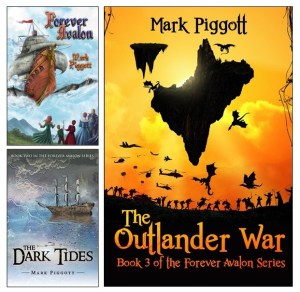
Mark Piggott is the author of the Forever Avalon fantasy book series. Forever Avalon is available for purchase as a paperback/ebook at Amazon. The Dark Tides: Book 2 of the Forever Avalon Series is available for purchase as a paperback/ebook from iUniverse Publishing and at Amazon, and other booksellers. The Outlander War, Book Three of the Forever Avalon series is available for purchase as a paperback/ebook from Austin Macauley Publishing, and at Amazon and other booksellers. His next two fantasy novels, The Last Magus: A Clockwork Heart and The Prometheus Engine: Book 4 of the Forever Avalon Series are being released in 2021.
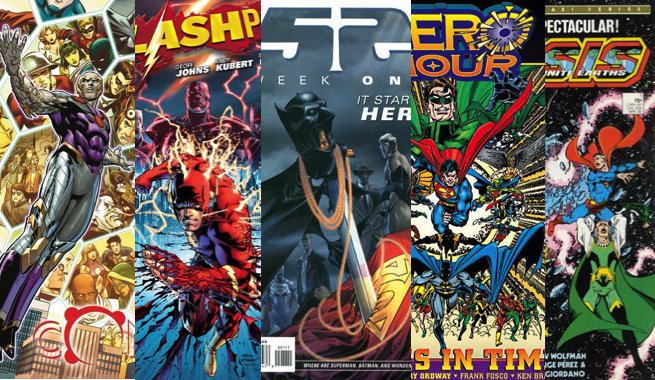
How many more comic book reboots do we have to endure nowadays?

Why does it seem that comic books don’t know what to do with themselves anymore? We’ve gone through several reboots, character deaths and subsequent rebirths, time travel, alternate realities, etc. Entire books have ended only to restarted under a new brand or idea, with revamped characters. It’s a never ending cycle.

I will admit that sometimes they have good ideas. Crisis on Infinite Earths and Age of Apocalypse are two of my all-time favorites. These multi-issue, cross brand arcs are what the comics need, from time-to-time. But lately, they seem to be doing it more for sales than content.

DC did the “New 52” back in 2011 after the Flashpoint crossover to give the characters a “jump start” into, what I would consider, their DCEU personas for the movie franchises. However, that didn’t last as the DC universe was rebooted again in 2016 with its Rebirth, as they called it.

So let me get this right… The original DC characters, in their first incarnations, lasted more than 60+ years until the New 52, which only last five years? What does that tell you?

Marvel is better at hiding these changes and reboots, but they’re terrible at killing characters off. In DC, three members of the Legion of Superheroes–Invisible Kid, Ferro Lad, and Chemical Kid–died and have stayed dead. Can you say the same for Jean Grey, Nick Fury, or anyone Deadpool killed in a dozen alternate realities? They even revived Scott Lang in the comics just to make the Ant-Man movie!

They’ve tried subtle reboots to invigorate the brand, like during the Onslaught crossover where Rob Liefeld got to create a new universe for the Fantastic Four and the Avengers, but it failed miserably. They tried to create a new “Ultimate” universe with new renditions and origins of classic characters, but then decided to combine them into one in the new Secret Wars (and I’m not talking the one where Spidey got his black suit).

Not all reboots are bad. Some bring fresh characters into the mix. During the Inhumanity crossover, we got a new Ms. Marvel as Carol Danvers finally became Captain Marvel. Two thumbs up for that one! And DC’s Dark Nights: Metal gave us one of the most twisted renditions of Batman ever seen in The Batman Who Laughs. Unreal!

So, let’s review. Reboots can be good at introducing new characters but some consistency please. We don’t need one every couple of years. It’s making “Silver Age” readers like me antsy!

###

SKU-000941753

Mark Piggott is the author of the Forever Avalon book series. Forever Avalon is available for purchase as a paperback/ebook at Amazon. The Dark Tides is available for purchase as a paperback/ebook at Amazon, Barnes and Noble, and iUniverse publishing. The Outlander War, Book Three of the Forever Avalon series is coming soon from Austin Macauley Publishing.

Authors have always been at the forefront when it comes to race relations

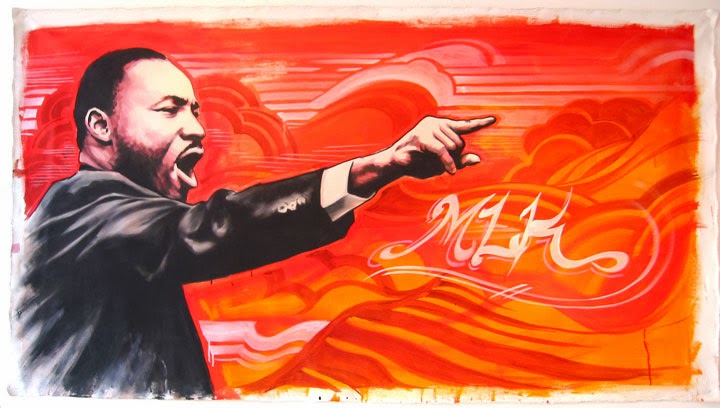
MLK

Today we honor the legacy of Dr. Martin Luther King, Jr., and the voice he brought to equality, race relations, and civil rights. I was only a baby when Dr. King was alive, but I remember his influence growing up in the 70’s. I was a military brat, raised in a very strict environment, but race was never an issue with me.

One of my best friends in elementary school was African-American. I don’t remember his name, but I do remember him. We connected through our love of comic books. We would both draw our favorite superheroes during our spare time in class. We even cut them out and played with them like action figures.

I think that was the key to my “education” on race relations. In the comics, especially for the superheroes, race was not an issue. Captain America teamed up with the Falcon. The X-Men has heroes that were black, blue, Native American, etc. The best example from the 70’s was the Legion of Superheroes. The covered every race, religion, creed, and color imaginable and always fought for the greater good.

That’s what’s great about comics. They have always represented the best and worst of us, and always showed how good triumphs over evil. Comics teach us that it’s okay to be different, and that we should work together for the benefit of the planet.

Unfortunately, things haven’t changed since Dr. King’s “I have a dream” speech. We are still divided, not united, by race. People still use labels for self-identity, persecution, hate speech,and even violence. We are not being “judged by the content of our character, not the color of our skin.”

I’m not going to get political here, pointing fingers at the left or the right. There are people guilty on all sides that are using race to perpetuate an idea or political power, and that’s wrong. We have to get beyond the name calling and find that middle ground. We can’t move forward if we’re not working toward a common goal.

Dr. King said, “Darkness cannot drive out darkness; only light can do that. Hate cannot drive out hate; only love can do that.” As writers, we have the responsibility to bring out the light and drive out the darkness through our stories. Stories emulate what’s going on in the world around them, i.e. The Jungle, To Kill a Mockingbird, Grapes of Wrath, etc. This trend has to continue, even more so today.

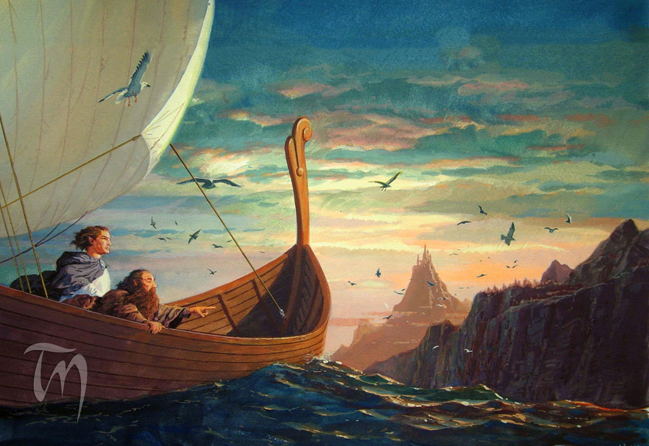
Legolas_and_Gimli_arrive_in_Valinor

Even in fantasy stories, there are issues of race. The animosity between Dwarves and Elves is a great example. Although you really can’t compare that to the real world, it’s speaks to the heart and soul of the issue. J.R.R. Tolkien, was keen on representing animosity and friendship throughout the Lord of the Rings books.

Gimli Glóin’s son is renowned, for he was one of the Nine Walkers that set out with the Ring; and he remained in the company of King Elessar throughout the War. He was named Elf-friend because of the great love that grew between him and Legolas, son of King Thranduil, and because of his reverence for the Lady Galadriel […] But when King Elessar gave up his life Legolas followed at last the desire of his heart and sailed over Sea […] We have heard tell that Legolas took Gimli Glóin’s son with him because of their great friendship, greater than any that has been between Elf and Dwarf. If this is true, then it is strange indeed: that a Dwarf should be willing to leave Middle-earth for any love, or that the Eldar should receive him, or that the Lords of the West should permit it. But it is said that Gimli went also out of desire to see again the beauty of Galadriel; and it may be that she, being mighty among the Eldar, obtained this grace for him.

— The Return of the King, Appendix A: Annals of the Kings and Rulers

I’m not trying to compare race relations in a fantasy story to the real-world issues today. What I’m trying to say is before you let that hate and frustration fill your heart, before your type that profanity-laced rant on Twitter or Facebook, remember this … Be a part of the solution, not a part of the problem.

# # #

51nd6H6sATL._SY344_BO1,204,203,200_SKU-000941753Mark Piggott is the author of the Forever Avalon book series. Forever Avalon is available for purchase as a book/ebook at Amazon. The Dark Tides is available for purchase as a book/ebook at AmazonBarnes and Noble, and iUniverse publishing. The Outlander War, Book Three of the Forever Avalon series is coming soon.