How far have we gone to ban Dr. Seuss?

Banned' Dr. Seuss Books Delisted on eBay After Selling for Thousands
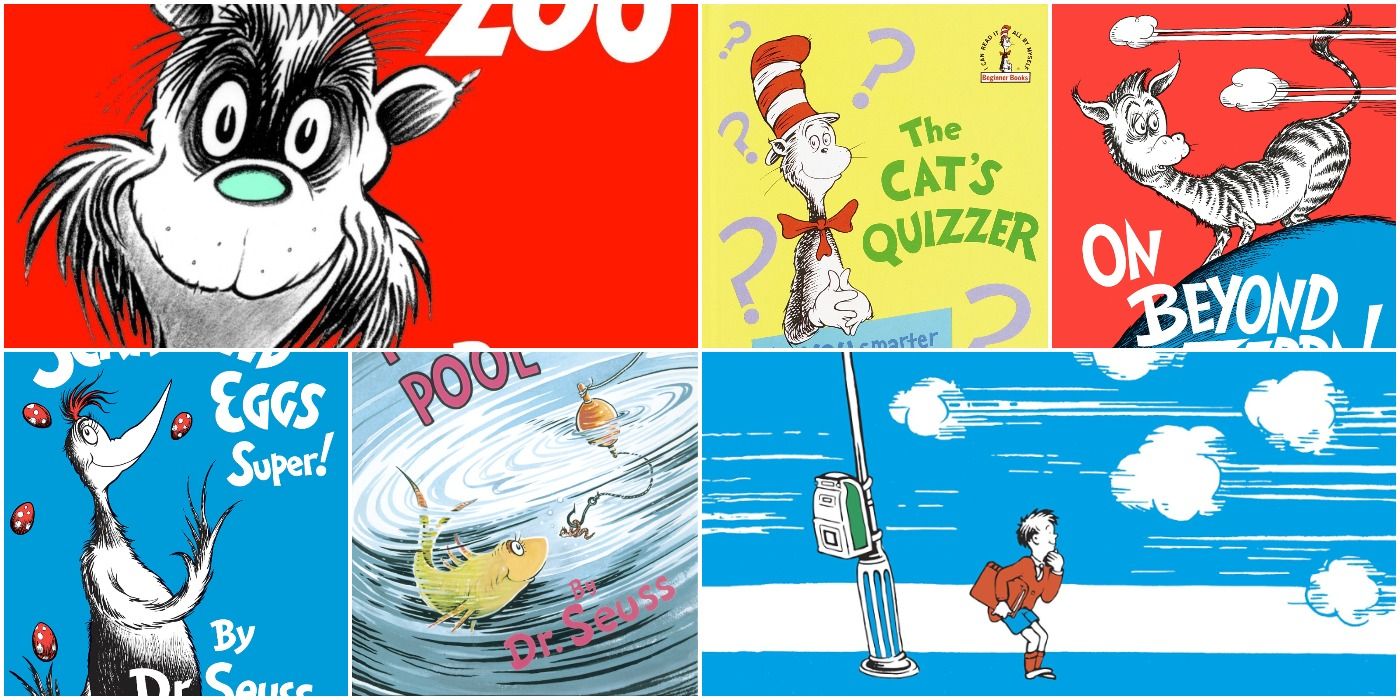
The six Dr. Seuss books that will no longer be published by Dr. Seuss Enterprises, including And to Think That I Saw It on Mulberry StreetIf I Ran the ZooMcElligot’s PoolOn Beyond Zebra!Scrambled Eggs Super!, and The Cat’s Quizzer.

I have spoken here often about free speech and the First Amendment. As a writer, I am a firm believer in this sacred institution. I stand by the adage that “I may not agree with what you say but I will defend your right to say it.” That said, have we (as a country and a society) gone over the edge with political correctness that we are banning Dr. Seuss?

I grew up reading Dr. Seuss, watching the TV specials, the movies, etc. His books have been an institution and a focal point in children’s literature. And yet, we are examining everything to the point of lunacy for political, racial, and social content, forcing it from our lives.

Like any parent, the first books I bought, read, and gave to my children were Dr. Seuss. We didn’t look at it through the lens of political correctness, we looked at it as an easy way to teach our kids about the environment (The Lorax) or counting and colors (One Fish, Two Fish, Red Fish, Blue Fish) or even behaving themselves while having fun (The Cat in the Hat). Are we also going to erase all the movies and TV specials based around Dr. Seuss?

I applaud the New York Public Library (NYPL) who took a stand against this audacity, saying, “As public libraries do not censor material, the very few copies we have of the six Dr. Seuss titles in question will remain in circulation until they are no longer in acceptable condition,’’ the NYPL said in a statement. “At that point, we will not be able to replace them, as the books are out of print. So, eventually, they will no longer be available to borrow.” This is the cost of our political correctness.

I think we are continuing to have this conversation on sensitivity in literature, especially anything written in the early 20th century. Is some of it insensitive to race and culture? Absolutely. They, like any form of entertainment of that time period, is a product of that time. It needs to be looked at through that spectrum, not the lens of today’s “cancel culture” who think anything and everything that is racially or socially insensitive needs to be eliminated. Remember these words:

“Those who cannot remember the past are condemned to repeat it…”

George Santayana, Spanish philosopher

We cannot simply erase the past, thinking it will create a better future. If we don’t learn from that history, we will just make those same mistakes all over again. Why can’t we just look at something and appreciate it for the sentiment and not outright cancel it?

Sorry for the rant, but back to Dr. Seuss… I understand some of the imagery in “If I Ran the Zoo” and “And to think I Saw It on Mulberry Street” are racially insensitive. We didn’t have such a world view when Theodore Geisel wrote and drew these books. The imagery is what it is, but to ban the books outright is, well, fascist. It’s the same thing that Adolph Hitler and the Nazi’s did to books written by Jews or that didn’t portray the Aryan image as they wanted it. So now, we’re doing it to anything that the “PC Police” say is insensitive to whatever race, religion, or creed.

We don’t need to ban books. We need to look at them through the lens of the time they were written, understand why they were written, so that we can have a conversation and learn what not to write or how to act. How can we understand the evil of racial injustice without “To Kill a Mockingbird” or the plight of runaway slaves without “Uncle Tom’s Cabin” and yet these books are being banned because of “racially insensitive language.” Do we ban rap music that uses the same language? No, and we shouldn’t so why ban books?

You can’t write a story about the south or any history without using somewhat bad language. I found myself in such a conundrum while writing my latest novel, Corsair and the Sky Pirates. The novel is a steampunk historical fiction set in the late 1800s, early 1900s. I have a very diverse group of characters, and the language back then was not PC. I will not use the “N-word” or anything like that, but I wanted to convey the repugnance of the villains in how they treat people. How do I do that without using such foul language? These are the issues that writers face today, because we want to reach our audience without jeopardizing our relationship with them.

So please, can we stop banning books! If it’s not your cup of tea, don’t buy it, read it, watch it or listen to it. If you want to understand what effect banning books has on society, read “Fahrenheit 451” by Ray Bradbury, “The Book Thief” by Markus Zusak, “1984” by George Orwell, or “V for Vendetta” by Alan Moore. Then maybe, you’ll understand why we shouldn’t do it.

# # #

Mark Piggott is the author of the Forever Avalon fantasy book series. Forever Avalon is available for purchase as a paperback/ebook at Amazon. The Dark Tides: Book 2 of the Forever Avalon Series is available for purchase as a paperback/ebook from iUniverse Publishing and at Amazon, and other booksellers. The Outlander War, Book Three of the Forever Avalon series is available for purchase as a paperback/ebook from Austin Macauley Publishing, and at Amazon and other booksellers.
Historical fiction takes you on another path, sometimes good and sometimes bad

Image result for man in the high castle fan art
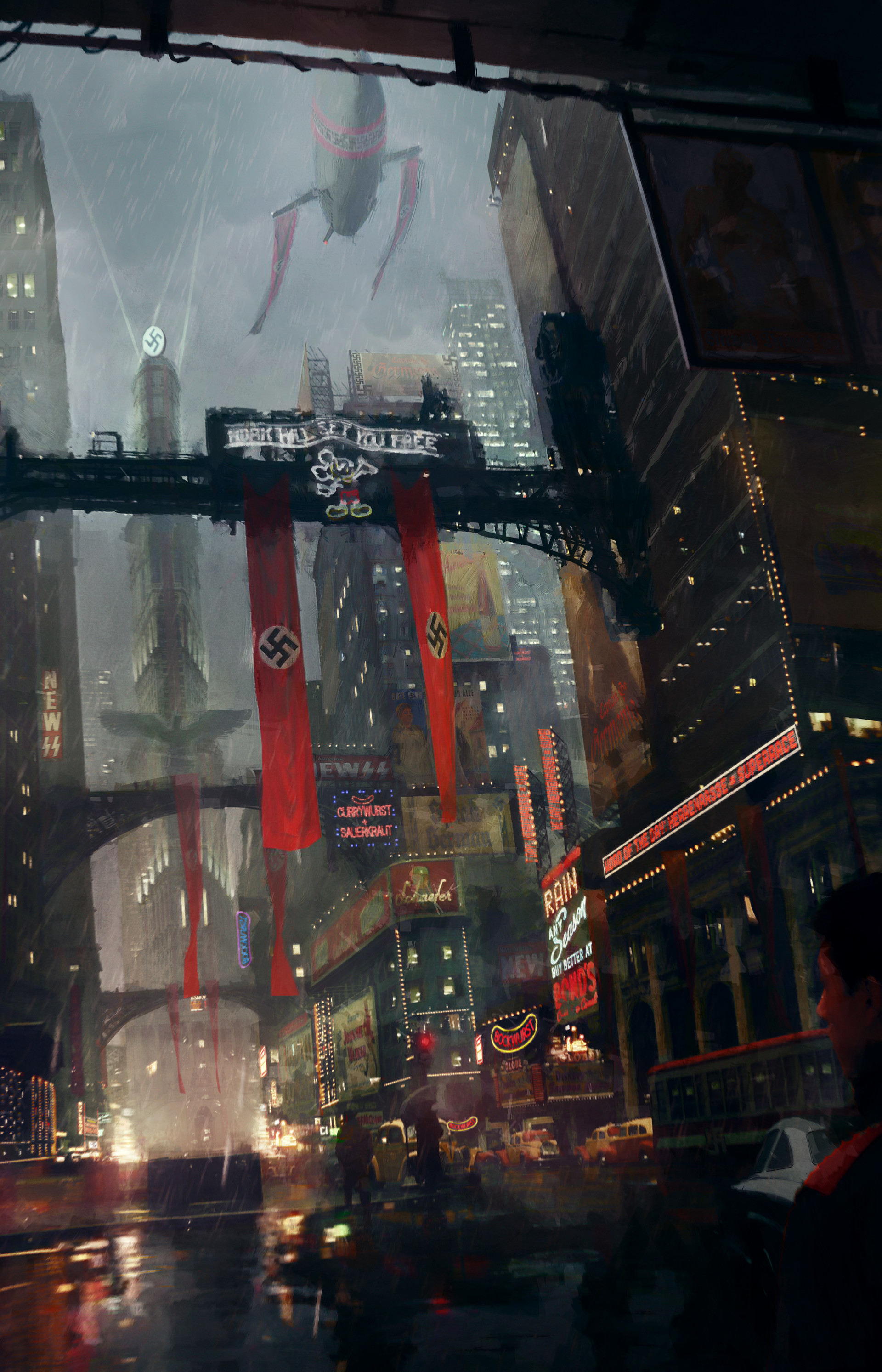
“The Man in the High Castle” fan art by Luis Guggenberger

I am currently in the midst of a major writing project that is different from anything I have written before. Historical fiction is not an easy genre to write. There are plenty of stories out there, like Harry Turtledove “How Few Remain” or Philip K. Dick “The Man on the High Castle” for example. These stories takes the world and turn it on end beyond what we know as history. It’s just science fiction but rather, as the term is coined, a historical fiction. These stories take one moment in history and with a simple turn of the switch, the world as we know it changed.

For example, in “How Few Remain” there was a moment in the Civil War where General Robert E. Lee sent out battle plans to his generals. One courier wrapped those plans around some cigars, but lost them enroute. These battle plans were found by a Union soldier and that gave them the edge over the Confederate general. This single moment in time changed the course of the war, in the eyes of the writer. That’s what it takes to create a good historical fiction… One moment in time changed and that brings about a new timeline. Doctor Who refers to this as a “fixed moment” in time, one that cannot change, like Rosa Parks refusing to get out of her seat on the bus in Montgomery, Alabama, in 1955. By changing these moments in time, we can change the future. To that end, a writer of historical fiction must be a writer and a historian.

Granted, you don’t have to be a history major to write historical fiction, but you need to research the Hell out of it. My current #WIP is Corsair and the Sky Pirates. The story is based on one of those pivotal moments in history, a chance meeting between Nikola Tesla and Jules Verne. This is where my story begins, but I first had to research a simple question… Were Jules Verne and Nikola Tesla ever in France at the same time? That question was essential to my story, and the answer was yes. In 1887, Tesla was working for the Continental Edison Company in Paris, France. At that time, Jules Verne lived in Amiens, France, just north of Paris. There existed the possibility of that chance meeting, so as a writer of fantasy and science fiction, I made it happen.

From that meeting grew a story of a new world, a new industrial revolution started years earlier than expected. This would be a steampunk world where fragments of a meteor would power technology, built by Tesla from the imagination of Verne. Oh, what a wonderful world it would be, right? That is how a historical fiction begins.

Many books of this fashion focus on two distinct moments… The Civil War or World War II. Seeing a different outcomes to these monumental, worldwide clashes piques the curiosity of readers. We all look at the world and wonder what difference would be made at these pivotal moments, a world under Nazi rule or where slavery extended beyond the Civil War. These are evil times, easy to prophesize and lay out because evil has one goal… Power!

Image result for tesla and edison
Thomas Edison vs. Nikola Tesla

So, in my own historical fiction, I had that moment in history but I needed a villain. That was easy for me. As Tesla was my protagonist, the only choice for an antagonist was Thomas Edison. Now, don’t get me wrong, I don’t think Edison was an evil man. He was a genius, an inventor of the precursor of much of the technology we use today. But, he was also a capitalist, interested in making money. Like many corporations today, i.e. Apple, Google, Twitter and the likes, controlling the narrative means controlling the people in the world. That’s the villain I needed, corporations. When you move the industrial revolution forward, you’re automatically giving control over to the corporations that provide us with technology that makes our life easier, for a price. I wanted to represent our current addition to technology and bring it to bear in a steampunk, industrialized world. Edison was the perfect villain for my story.

That’s the beauty of writing historical fiction. You can change the world into something completely different. From turning Abraham Lincoln into a Marxist/Socialist (“How Few Remain”) to an alliance between Roosevelt, Churchill and Hitler to fight back an alien invasion (“Worldwar” series), it is an open book when writing historical fiction. The key is to base it in history. Where you go from there depends on the storyteller.

Research is the best thing for anyone writing historical fiction. I’ve learned more about the world at the turn of the century since I started writing this story. I learned about Jack Johnson, Geronimo, William Hearst, and more. From the people, to the countries, to the events, it is an open book… Better yet, an open world for any writer to explore. It’s the ability to create a world from one we all know, but make it new and make it different.

# # #

Mark Piggott is the author of the Forever Avalon fantasy book series. Forever Avalon is available for purchase as a paperback/ebook at Amazon. The Dark Tides: Book 2 of the Forever Avalon Series is available for purchase as a paperback/ebook from iUniverse Publishing and at Amazon, and other booksellers. The Outlander War, Book Three of the Forever Avalon series is available for purchase as a paperback/ebook from Austin Macauley Publishing, and at Amazon and other booksellers.

A new Steampunk Anthology from Crystal Peake Publishers to include “Corsair and the Sky Pirates”

Back in October, I entered a steampunk writing contest through Crystal Peake Publishers. I entered a short story Corsair and the Sky Pirates for their consideration. For the first time, my hard work and imagination paid off. My story was selected to be included in a Steampunk Anthology to be published by Crystal Peake. I am honored and blessed to be considered for this. This is the first time, as an independent author, that I’m being published without all the trappings of paying to be published. It’s just so amazing, I am on “Cloud 9 3/4” right now!

Corsair and the Sky Pirates tells the story of a chance meeting between Nikola Tesla and Jules Verne that led to a world powered by steam generated not from coal or fuel, but a meteor fragment. Tesla discovered a comet named Uriel was raining pieces of these powerful meteorites across the globe. It led to an industrial revolution years ahead of its time, along with an unparalleled rivalry between Tesla and Thomas Edison, but progress has a price. While the rich and powerful lived in luxury in this new world, the everyday people groveled beneath the boot of their corporate masters. One man brought hope to the downtrodden. His exploits were legendary, his crew infamous, and his airship a vision of the future. Corsair and his Sky Pirates flew around the world, carrying out deeds that spurred the imagination. These modern-day “Robin Hood” bandits stole from the robber barons and corporate elites and returned the spoils to the people.

I will make more updates on the other authors I’m honored to join in this anthology as well as where you can purchase this collection of steampunk short stories. Thank you for your continued support of this independent author and crazy dreamer. 2021 is starting out as a great year!

# # #

Mark Piggott is the author of the Forever Avalon fantasy book series. Forever Avalon is available for purchase as a paperback/ebook at Amazon. The Dark Tides: Book 2 of the Forever Avalon Series is available for purchase as a paperback/ebook from iUniverse Publishing and at Amazon, and other booksellers. The Outlander War, Book Three of the Forever Avalon series is available for purchase as a paperback/ebook from Austin Macauley Publishing, and at Amazon and other booksellers.