 Whenever you’re writing a story, you always need a good villain. Villains are the bane of your heroes existence. In fantasy, a good villain is usually a powerful warlord, an evil sorcerer or sorceress, or maybe a grotesque creature. In the case of Abdel Ben Faust, it’s a little bit of everything. He’s a half-demon and a master swordsman, the perfect killing machine, available for the right price.
You’ll meet Faust in the third book of the Forever Avalon series, The Outlander War. It’s currently available for preview at Inkitt.com as part of their “Story Peak” novel contest, where three manuscripts will be selected for publication if it gets more than 100 people reading the book. Yes, sorry for the shameless plug but a writers’ gotta do what a writers’ gotta do.
Faust has everything a writer looks for in a villain: Strength, guile, intelligence and no morals whatsoever. He’s a perfect sociopath who thinks only about himself and his needs. I think of him like a Ted Bundy or John Wayne Gacy, killing without remorse. You can relate to his heritage and his upbringing as the cause for his apathy, but to me, he made that choice all on his own.
I created Abdel Ben Faust from a character I once created in my early days of binge-playing Dungeons and Dragons during my misspent youth. He was a half-orc fighter with (natural rolled) 18/00 strength. I haven’t introduced Orcs in Forever Avalon yet, so instead, I made him a half-demon. His heritage plays a major role in The Outlander War. For now, I wanted to give you a glimpse into the pure evil by introducing Abdel Ben Faust to you.
***
On Avalon, South Essex was known as a city of artisans. The finest craftsman could be found in South Essex of all mediums—wood, metalwork or canvas—as well as exceptional tailors, tinkers, and tradesmen. It was a town full of the finest shops you could ever find outside of New Camelot.
The Black Swan was one of the most reputable taverns in South Essex, with the finest wine and spirits in all of New Camelot. The food at the Black Swan also had a reputation for being the best served in all Avalon. But even the best places can attract some unsavory characters.
Inside, the tavern was brightly lit with the glow of candlelight and roaring fires. The rooms were decorated in the finest silk drapes and tapestries of red and black. The décor epitomized the name of the tavern as swans could be seen represented in various shapes and sizes from statues to wall sconces.
While the rest of the tavern was crowded, as usual, the back of the room was empty, except for one guest. The owner did this at the request of the guest but also so his other patrons wouldn’t be subjected to his company.
He sat alone with his back to the wall, gorging himself on rare roasted beef and bottles of 500-year-old Aldinian Whiskey. He appreciated spirits, especially rare ones, and he always came to the Black Swan whenever he was in town because they always carried the best.
His name was Abdel Ben Faust, a mercenary by trade and considered by many as the finest swordsman on Avalon. His long black hair was pulled back tightly in a ponytail, exposing his pointed ears and long face. A scar ran from his left temple, across his nose, and down his right cheek … A reminder of being cut from his mother’s womb. His mustache was long and thin, hanging down below his chin, but that was where his true heritage showed through.
His skin was reddish-brown and, from his chin, grew horns that resembled a goatee, twisted like braided hair. Abdel Ben Faust was a half-demon, the son of a witch and an Incubus, conceived during a blood moon in a magical ritual. His mother died while giving birth to him. He had to be cut from her womb by the same clerics that killed his demon father.
Faust was raised a slave, tormented regularly for his demonic form, but in his torment grew strength and resolve. He molded himself from slave to warrior, becoming a master swordsman, available to the highest bidder.
He has avoided conflict with the Gil-Gamesh since his return to Avalon thanks to an innate ability from his demonic lineage. Faust can conjure “demon holes” to move from place-to-place, unseen. Demon holes were doorways of black smoke, fire, and brimstone. Only binding him in iron chains prevented him from using his power.
Faust came to South Essex to indulge his tastes while the Gil-Gamesh and the rest of the Knights of the Round Table moved to the coast to protect Avalon from the Outlanders. He knew there would be no trouble coming to the Black Swan and drinking his fill before moving on to his next job.
The curtain to the back room was pulled aside as young Finnick Devereaux, son of the Earl of South Essex, Sir Robert Devereaux, stepped in. The young man was nearly 50, young for a noble of Avalon. His dirty blonde hair, dashing good looks and fine clothes endeared his upright lineage. He pulled a handkerchief from his inside pocket and waved it in front of his face as he tried to dispel the stench coming from Faust.
“He is here milord, just as I said,” Finnick said to someone behind the curtain. A robed, hooded figure stepped through, walking right past the young noble.
“Good … Leave us Finnick, and make sure we are not disturbed,” the hooded figure said.
“Are you sure you want to do this milord?” Finnick asked. “The last man who interrupted Abdel Ben Faust while he was eating had his head chopped off and tossed into a stew pot.”
“Not worry, I’ve come bearing gifts,” he said as pulled a bottle from out of robe pocket. Finnick just bowed and left the room, closing the drapes behind him.
The stranger walked up to Abdel’s table but stopped when he drew his sword as he chugged down the last of the whiskey, resting his blade across the table. It was a broad sword, nearly four feet long, with a jagged edge etched along the top edge of the blade. Wisps of smoke rose up from the sword, as if it was burning, as the runes etched on the blade glowed softly. This was Deathsong, a cursed blade that only Abdel Ben Faust could wield and he did so very well.
“I’d think twice before sitting down,” Faust warned as he finished his drink. The stranger just placed the bottle down in front of him. Faust dropped his own bottle to examine the gift.
“Can it be?” he exclaimed. “Panaque, distilled from the vines of the dryads of Meliai, over 4,000 years old!” He popped the cork and smelled the delicate bouquet of the fine spirit. He looked up at the stranger and nodded his head to the chair in front of him. The hooded figure sat down as Faust sheathed his sword and poured himself a drink.
“So to what do I owe this honor and who do I have to kill to keep this bottle?” he asked as he took a sip of the delicious liquid.
“The bottle is yours, Abdel Ben Faust, a gift for listening to what I have to say,” he began. “But first, I have a question for you. Last year, when Morgana le Fay was resurrected, why were you not part of her forces at the Battle of Idlehorn Mountain? Surely a swordsman of your caliber could have turned the tide in her favor.”
Faust seemed to be insulted by the stranger’s accusation but took it in stride for the moment. “Her cause was lost from the moment she began,” he scoffed as he took another sip.
The hooded man seemed irritated by his answer but just sat back and listened. “Why do you say that?”
“Because she let the Gil-Gamesh live,” he answered. “You don’t give someone like the Gil-Gamesh any glimmer of hope. She should have killed him when she had the chance. That’s always been the problem with despots like Kraven Darkholm and Morgana le Fay. They want that power but they want to gloat about it in the process. That’s what got them killed.
“I don’t side with losing causes,” he concluded as he downed the last of his drink. “I’ve answered your question, now you answer mine … What do you want?”
“I want you to lead an army to take Avalon out of the grips of the Pendragon’s and the Gil-Gamesh,” the stranger said without skipping a beat.
Faust just laughed under his breath. “Well if you wait long enough, the damn Outlanders with all their technological weapons will do it for you.”
“Oh, I doubt that,” the stranger impugned. “If the Gil-Gamesh is as resourceful as you say, then all I have to do is wait until he restores Avalon as it was before, hidden from the outside world. Then, we tear Avalon apart, taking the throne and killing him in the process.”
Faust was not convinced by the hooded stranger’s plan. He laughed again as he poured himself another drink. “Well in the first place, you’d need an army at least 10,000 strong,” Faust calculated. “Hell, the goblins don’t even have half that number anymore, and the trolls are all whipped lackeys for that Shield Maiden now. So where is this army you speak of?”
The stranger reached into his robe and pulled out the ruby amulet, still glowing from the strong magic’s imbued within. Faust just looked at the amulet, unfazed and uncaring. “What’s that supposed to be?” he asked.
“The key to controlling the most powerful army in creation, the Wraith Legion of Purgatory!” Abdel Ben Faust was stunned, aghast at the stranger’s claim. The Wraith Legion was an army of fallen knights, trapped in purgatory because of some dishonor or shame that fell upon them in life. They served a penance, keeping the demons of the underworld in check until, one day, they’ve earned their place in Heaven.
“No one can control the Wraith Legion. It’s impossible,” he exclaimed.
“You can with this,” the stranger said, dangling the amulet. “With this amulet, they will follow your every command. You will be their General, Abdel Ben Faust, and you will conquer Avalon for me.
“In return, I will give you the Twin Swords of the Dragon Moon as payment, for your collection.”
It is known that Abdel Ben Faust has, over time, collected the sword or weapon of every knight, every warrior and every monster he ever bested in battle. He kept his collection hidden from prying eyes. He liked to savor each and every victory by looking at the weapons of his fallen enemies hanging on the walls of his vault. Adding the swords of the Gil-Gamesh would be the centerpiece of his collection.
The stranger had intrigued Faust with his offerings but wasn’t convinced completely just yet. He needed to know something more. “Who are you?” he asked.
The hooded figure stood up and peeled back his hood, revealing his face to Faust. The half-demon was stunned as he recognized the face almost immediately. “You? But that’s impossible, you’ve been dead for centuries, millennia even! It can’t be you!”
The stranger pulled the hood back over his head and sat back down. “I assure you, it is me, Abdel Ben Faust. I have many machinations at work, but I need a general to lead my army. You are the one man I can entrust with this task because I know that you will only accept my offer if you believe it can succeed.
“So will you, will you join me?” he asked. Faust sat there, stroking his chin, contemplating all the stranger has offered him. After a few moments, he raised his glass to him.
“When do we get started?”
***
 Mark Piggott is the author of the Forever Avalon book series. Forever Avalon is available for purchase at Amazon and Barnes and Noble. The Dark Tides is available for purchase at Amazon, Barnes and Noble andiUniverse.The Outlander War can be previewed at Inkitt.
 I saw a great quote from Victor Hugo on Facebook the other day. He said, “A writer is a world trapped in a person.” That’s so true, especially for those of us who write science fiction and fantasy. The world we create in our stories began inside us. You have to dive deep into that world to find all the different facets of what you create. Like spelunking, you never know what you’re going to find.
 Ah, the joys of Christmas (in July) from the cosplayers all dressed in their finest costumes, the shrieking sounds of grown men as they find a rare comic for their collection, and the flashing lights of cameras as the stars take the stage. This is San Diego Comic-Con or Christmas for us nerds. It’s our time of year to bathe in the glory of everything comic book, sci-fi, and video game fantasy.
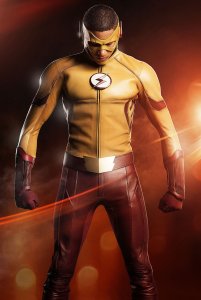 The CW is charting a course “full speed ahead” with The Flash, Arrow, Supergirl, and Legends of Tomorrow. The Flash is definitely moving in the “Flashpoint” storyline direction, with a lot of changes in Barry Allen’s new reality. We get to see Kid Flash in all his glory (great costume BTW) and, in the teaser, I saw a brief glimpse of the name and image of a classic Flash villain, Dr. Alchemy. It’s not exactly Flashpoint from the comics, but it seems to fit into the CW’s DC universe. Arrow is changing its tone a bit as Oliver tries to be mayor by day, vigilante by night. He gets help from a handful of new recruits in the form of Mister Terrific, Wilddog and Artemis. The villain for season 5 is Prometheus. He’s a big bad in the comics with tech that allowed him to mimic his enemies fighting style and use it against them, like Taskmaster in Marvel. His origin is different in CW as he was affected by Arrow’s initial killing spree in season one. We’ll see if these changes can bring them out of a dismal, and often criticized, season 4. There’s not much on Supergirl, though one rumor brings the Legionnaire Mon-el to National City and we’ll finally get to see her cousin, Superman, in real life. We’ll have to wait and see if they make an impact as part of the CW. Lastly, Legends of Tomorrow is putting together the Justice Society of America and facing off against the Legion of Doom. You can’t get any better than when Smallville brought the JSA to TV, so this will be interesting to see. Overall, CW has tried its best to keep their TV shows separate from the DC movie universe but still true to the comics. In my opinion, they’re doing a great job.
 Besides Netflix and the cancellation of Agent Carter, Marvel’s only other show is Agents of Shield on ABC. With the release of Doctor Strange in November, Agents of Shield are introducing magic to their combined movie/TV world. Ghost Rider will be the main antagonist for them, but not the Johnny Blaze Ghost Rider as portrayed in the movies by Nicolas Cage. This is the current comic book version of Robbie Reyes, played by Gabriel Luna. Instead of a motorcycle, Robbie drives a Dodge Charger with flaming wheels. There are a lot of great back story elements that will tie this version of the Ghost Rider into the current cast of Agents of Shield, including Inhuman Daisy’s evil dad, Calvin Zabo, a.k.a. Mr. Hyde. Marvel does it different from DC, keeping their movie and TV universes one and the same. It’s great because it plays off each other and sometimes brings their movie star power (Samuel L. Jackson and Jamie Alexander just to name a few) to the small screen.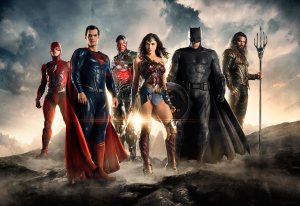
 Wonder Woman took an early turn out of the gate by starting her adventures in World War I vice World War II, though the sentiment behind this was mainly because there hasn’t been a superhero movie done in that era before. To be honest, I think that putting Wonder Woman in World War II would bring too many comparisons to Captain America: The First Avenger anyway, so it was a good choice. They are sticking to her mythology, so that’s good news to me, and her fighting scenes in the movies are killer. Plus it’s about damn time Wonder Woman got her own movie anyway. Lynda Carter has been waiting for more than 40 years to pass the torch and Gal Gadot was the best decision Warner Brothers made in casting this movie.
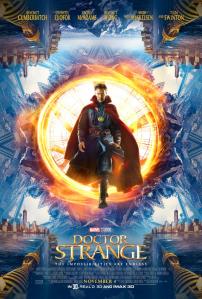 I don’t want to go back-to-back DC, so let me jump into Doctor Strange next. I really have mixed feelings about this. The trailer was amazing. The special effects reflect the incredible power of the mystic arts as created by artist Steve Ditko and writer Stan “The Man” Lee. The casting was undeniable as Benedict Cumberbatch and the rest of the cast are incredibly talented, even with the haters trolling about Tilda Swinton as the Ancient One. What bothers me is Baron Mordo, as portrayed by Chiwetel Ejiofor. In the comics, Mordo was a jealous, ambitious protegé of the Ancient One that turned to evil when Strange was picked over him. They seem to be more allies than adversaries in the movie. I’ll have to wait and see if there’s more to their relationship.
 We’ve all experienced it, some more than most. It is an obsession that we can’t explain nor can we understand ourselves. With me, it began in college in the 1980s, where I was introduced to Dungeons and Dragons. That’s where I fell for it hook, line, and sinker.
 Even after I joined the Navy, I continued to play D&D. I found friends aboard the ship and we played during our duty days and off-duty hours. When I eventually stopped playing, I turned my obsession around and started writing, and it was from that, I created my
 The BFG, written by Roald Dahl in 1982 and directed and produced by Steven Spielberg, is the only book by Dahl that hasn’t been made into a feature film previously. The BFG (Mark Rylance), while a giant himself, is a Big Friendly Giant and nothing like the other inhabitants of Giant Country. Standing 24-feet tall with enormous ears and a keen sense of smell, he is endearingly dim-witted and keeps to himself for the most part. Giants like Bloodbottler (Bill Hader) and Fleshlumpeater (Jemaine Clement) on the other hand, are twice as big and at least twice as scary and have been known to eat humans, while the BFG prefers Snozzcumber and Frobscottle. Upon her arrival in Giant Country, Sophie, a precocious 10-year-old girl from London, is initially frightened of the mysterious giant who has brought her to his cave, but soon comes to realize that the BFG is actually quite gentle and charming, and, having never met a giant before, has many questions. The BFG brings Sophie to Dream Country where he collects dreams and sends them to children, teaching her all about the magic and mystery of dreams.
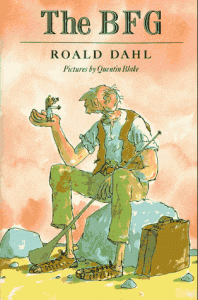 This brings me back to my opening statement. Kids, and even parents, today flock to Finding Dory instead of The BFG. Don’t get me wrong, I love the Pixar movies, but to see a classic like The BFG ignored for a talking fish is sad. This generation is so hung up on movies, television, the internet, and video games that they all but ignore reading such great stories. It’s only because of technology today that movies can bring these stories to life. Watching The BFG made me want to read the book again, to bring back the magic from long ago.
 Death is always an option for writers, especially since death is a natural part of life. Heaven and Hell are concepts we’ve learned about from Christianity, Judaism and Islam. Although, there are many who are skeptical of religion and do not believe in an afterlife. For example, reincarnation is a concept of the afterlife found among Hindus, Buddhists, Jains, Sikhs, Rosicrucians, Theosophists, Spiritists, and Wiccans. Before that, you have varied concepts of the afterlife from the Fields of Elysium and Tartarus to Valhalla and Limbo.
 It was Plato who said, “The soul takes nothing with her to the next world but her education and her culture. At the beginning of the journey to the next world, one’s education and culture can either provide the greatest assistance or else act as the greatest burden, to the person who has just died.” Although this sounds a little more like reincarnation than the afterlife, I think it speaks of a higher purpose. We are taking all we are from this world into the next when we die. That’s a lot of baggage to bring with you. The stories of one’s life can be told by what you take with you into the next. That brings some peace and solace while others hope it is enough to earn them a place in the afterlife.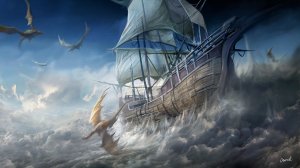
 Disney is known for its great animated movies, the majority of which take place in the fantasy genre. Classics like Snow White and the Seven Dwarfs, Sleeping Beauty and The Sword in the Stone have all the right elements of a great fantasy movie: wizards and witches, dragons and knights, good versus evil, etc. There is one, however, that was a beautiful adaptation of a classic fantasy novel that Disney decided was too dark and scary and swept it under the rug of forgotten classics. I am, of course, referring to The Black Cauldron.
 The imagery in this movie was quite dark and spooky, especially for a kid’s animated movie. The Horned King looked like a walking corpse. It had all the earmarks of a Disney movie with the boy hero, a beautiful princess, the evil villain and his henchmen, and of course, the comedic sidekick; but even with all that, Disney had problems with the film. After its initial audience screening, the Disney Studio chairman Jeffrey Katzenberg ordered massive edits and cuts in the film, particularly in the “cauldron born” scene where the Horned King brings his army of the dead to life. There was even scenes where one of the “cauldron born” monsters sliced the neck of one victim and the torso of another. It was very gruesome indeed.
 Mark Piggott | Fantasy & Steampunk Author