Sometimes You Need a DEMON to Fight Against the Darkness – Presenting “A Dance of Darklings and Demons”

“While the Titans reigned in the heavens above Ard, Lilith ruled from Kehena below, thirsting for the blood of the innocent to satiate her desires. The Dark Lord sent the darklings out from the Tower of Ibris to devour the people in her name. The Titans asked the great god Atua to send help. He sent his acolyte, the Alchemage.” – From the Book of Ard
After nearly two years, I am finally able to announce upcoming release of my epic dark fantasy, A Dance of Darkling and Demons. I wrote this novel years ago, which I’ll get to in a moment, but due to things outside my control, it has been delayed. Finally, thanks to the dedicated work of Ravven White and Curious Corvid Publishing, its finally ready to release.

This book is a bit of a religious exploration for me. I was going through some personal issues involving God and other religious practices. My daughter converted to Norse Pagan and it hit me rather hard. I didn’t stop her, but I prayed she would find her way back to God. I wanted to reflect my own personal beliefs in my Lord and Savior, but as a fantasy writer, I needed to put it into a story. So, I used the concept behind one of my favorite Star Trek episodes to help tell my tale. Sounds strange, but hear me out.

The episode “Who Weeps for Adonais?” where a powerful being claiming to be the Greek god Apollo appears and demands that the crew of the Enterprise disembark onto his planet to worship him. I loved the idea of gods traveling across the stars, but I wanted to make them fantasy gods, not aliens, and I didn’t want to use Olympians. Instead, I used their parents, the Titans, as the central pantheon to my story. As for the one true God, I didn’t just want to use “God” or a name that we associate with God. Instead, I found the name Atua in the Maori language, which means God. In fact, a lot of the Maori traditions inspired the mythology behind this story, particularly with the Alchemages and their journey as warriors.

It was all starting to come together. This was a story about a world where the pantheon of Titans are worshiped by the people, yet one group of individuals worships who they call “the one true God,” Atua. They are persecuted as “demons” and “heretics” because of this belief. This religious persecution is the heart of my book, A Dance of Darkling and Demons.

When darkness enveloped Ard, the people cried out across the stars for help, and the Titans answered their prayers. The banished gods bestowed the glittering gift of magic to Humans, Elves, Animalian, and Nephilim alike. But the darklings, creatures of shadow and death, poured out like oil from the Obsidian Cliffs. These creatures, all gnashing teeth and shifting gloom, sought to devour the light of magic for themselves. As armies faltered and hope dimmed to a dying ember, the Titans themselves knelt in supplication before the great god Atua for help. He opened his hands and sent his most powerful weapon—the Alchemage.

These shadow hunters wielded not just magic, but the ether itself through alchemy, forging spells in crucibles of will and turning base elements into devastating power. But their victories were pyrrhic, paid for by their own souls. The very people they saved recoiled from them, branding them heretics and demons for turning away from the Titans. For a thousand years, this war of attrition ground on, a slow bleed against the world’s edge.

Canaan Treyhawke bled at the front lines beneath the Obsidian Mountains and lost his leg to war, but he fought on. He walks the grime-slicked streets of Perdition’s Point, a shadow hunter protecting a city that whispers “heretic” as he passes by. Canaan fights for his sister’s smile and the quiet safety of the woman he loves, and for a city that curses his name even as he strives to protect it. And now, he finds himself in the heart of a conspiracy that threatens to unravel the very fabric of Ard.

A shadow tamer—a mortal man twisted by his allegiance to the sinister Tower of Ibris—was on the hunt for the Progenitor. With this chaos tightening around him like a noose, Canaan must journey from the gilded spires of Signus Prime to the rain-slicked streets of the capital city of Adolphus. He must unmask the shadow tamer and sever this new threat before the darkness consumes everything.

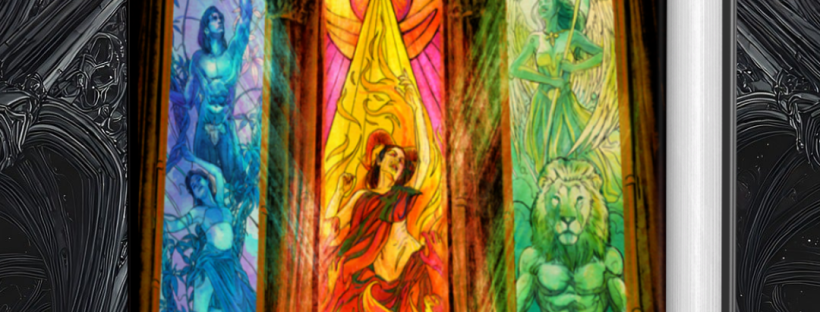
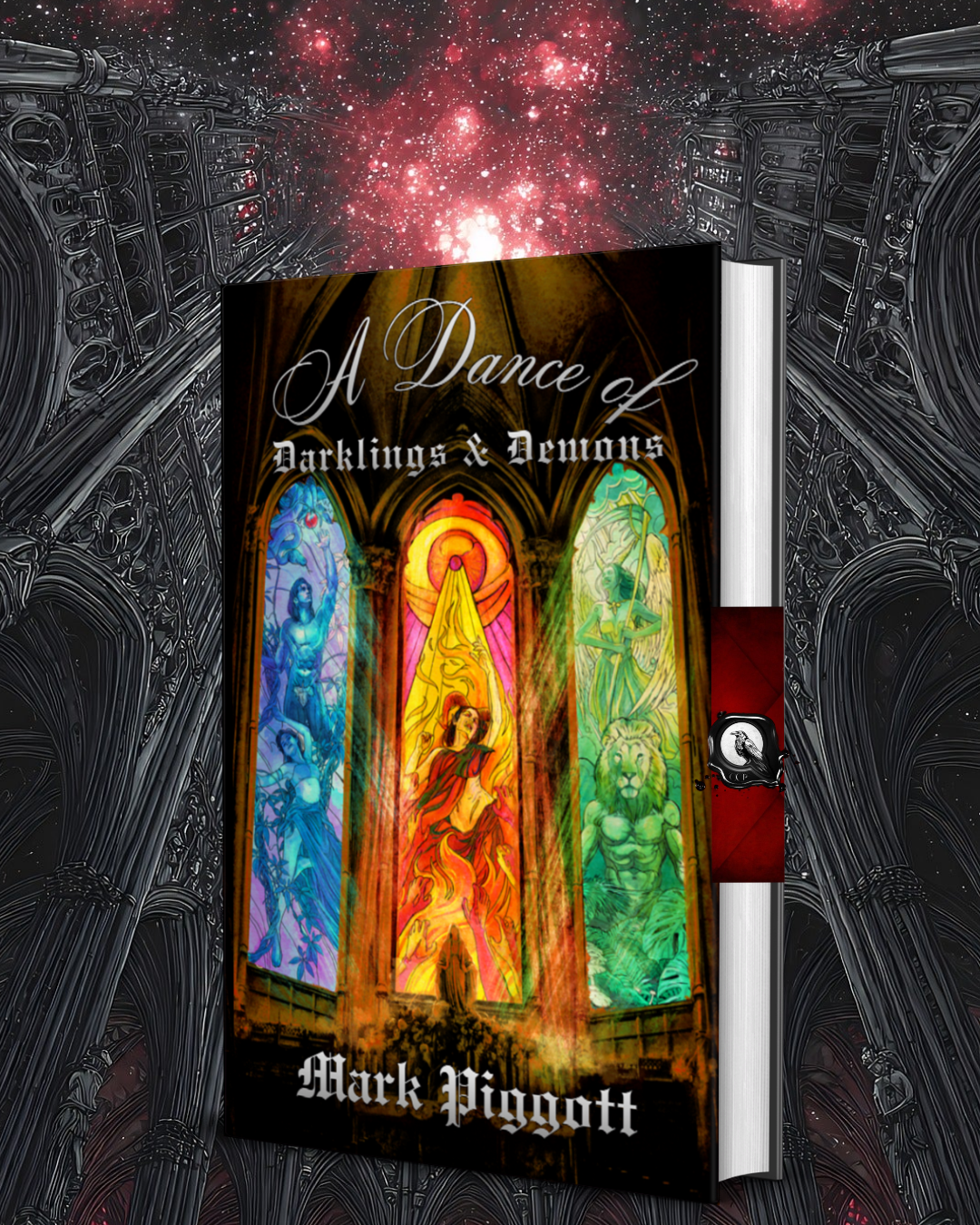
The other thing I want to mention is the title, A Dance of Darkling and Demons. I know it sounds a little strange but to be honest, it’s exactly what I wanted. I thought an alliteration, the repetition of words, flowed so beautifully. The cover itself shows the deep religious undertones of the story, showing stained glass panels representing the four races of Ard—humans, elves, animalia, and the Nephilim. The center shows the dark goddess, Lilith, being captured and sent to the depths of Kehena by the Eye of Kronos. It shows the heart of the book in this vibrant cover. Plus, the interior art by Dennis Saputra really captures the essence of the Darkling monsters.

I want to once again thank Ravven White and Curious Corvid Publishing for bringing my book across the finish line to publication. A Dance of Darkling and Demons will release on November 3.

Great villains make it easy to be bad

“Evil is relative – and what I mean by that is that our villains are as complex, as deep and as compelling as any of our heroes. Every antagonist in the DC Universe has a unique darkness, desire and drive.” 

— Geoff Johns

extEvery story has to have an interesting protagonist, but it also must have an equally villainous antagonist. Most people think being bad is easy, but its not. We’re taught at a very young age that being evil is stupid. I remember the days of Snidely Whiplash, Boris and Natasha, and Dick Dastardly. Their plans always failed because of their mistakes.
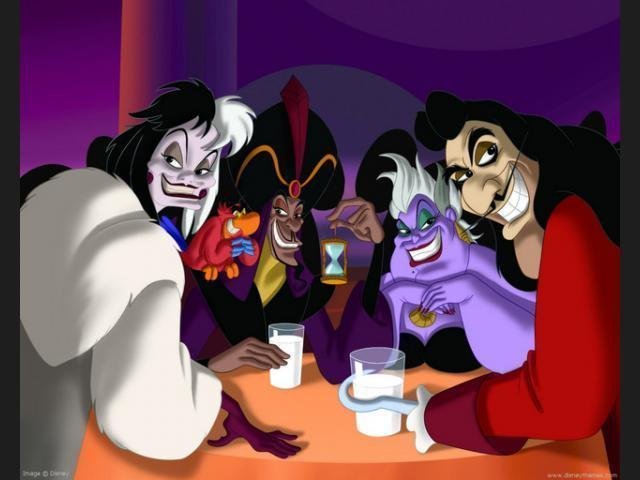
But recently, evil has evolved. Villains are more complex, complete sociopaths that work their way to beating the good guy through intricate plans. Characters like Hannibal Lecter, the Joker, and Cersei Lannister are shown as calculating, devious beings with the utmost evil intent. Even Disney villains are becoming darker than ever. Their hearts are as black as a starless night, and yet, we are curious as to what make them tick. That is why they interest us.

Every crime drama from Criminals Minds to Law and Order: Special Victims Unit brings us a daily dose of evil to dissect their mind and their motives. We watch every day people responsible for horrors so awful we can’t stomach it, and yet we can’t turn away. It’s intriguing to some, to others, perhaps its an escape. Have you ever imagined doing something horrible to another person? Sure you have, we all have. It’s acting out on the those evil impulses that separates us from being complete sociopaths. Some have even come to be anti-heroes, those doing bad in the name of good. It’s all so confusing.

It’s the same in writing. You want to create a villain, an antagonist, that interests the reader but not one that takes the story away from the hero, or protagonist. I believe that, in order to take the morale high ground, good must always triumph over evil. Sure, evil has their victories, but in the end, they lose.

Villains are very difficult characters to create, unlike the old days where villains were obvious to all. Villains today are given a myriad of excuses and diagnosis to justify their actions. Bette Davis once said, “There are new words now that excuse everybody. Give me the good old days of heroes and villains, the people you can bravo or hiss. There was a truth to them that all the slick credulity of today cannot touch.”

In my own stories, I try to stick to the basics, relying on classic villains:  Morgana le Fay and Mordred. These characters have been a part of fantasy literature. Their ideology has been both good and evil, and somewhere in between. I find it easy to use these classic characters and add my own addition of supporting villains, as it were, to blend in my own style to the story.

You don’t need the obvious villain with bad teeth and the curled mustache that is twisted and curled around his fingers. Today’s villains are smooth charmers, one that will pour out their love to you while they stab you in the back with a knife. A great example of that is Amy Dunne in Gone Girl by Gillian Flynn. That woman is pure evil, and you wouldn’t realize how evil until the very end of the book.

I find it challenging to decide between greedy and corrupt or calculating sociopaths. One may give way to the other, or vice versa. Although villains make being bad look easy, writing them into a story is a challenge for any author. The key is finding that balance between Captain Bligh and Adolf Hitler. It’s not easy, but essential.

# # #

51nd6H6sATL._SY344_BO1,204,203,200_SKU-000941753Mark Piggott is the author of the Forever Avalon book series. Forever Avalon is available for purchase as a book/ebook at Amazon. The Dark Tides is available for purchase as a book/ebook at Amazon, Barnes and Noble, and iUniverse publishing. The Outlander War, Book Three of the Forever Avalon series is coming soon.
Where have all the good wizards gone?

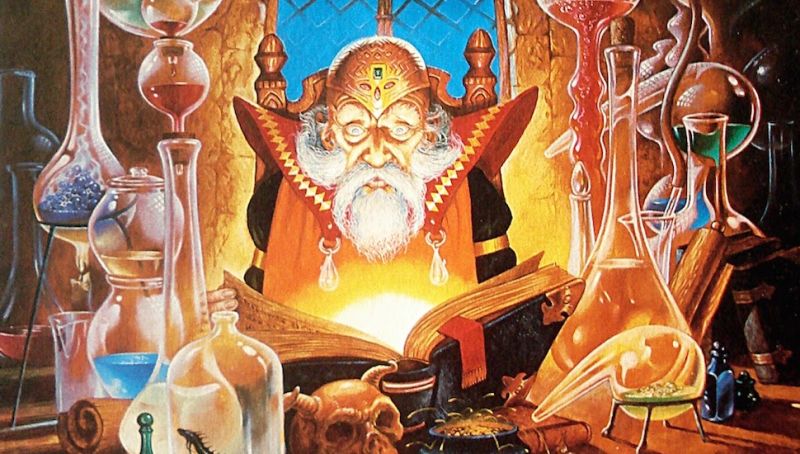
785276646085089940It’s good to be bad, am I right? There seems to be a trend where anyone touched by or practicing magic is always seduced to darkness. The same goes for those who gain incredible powers or become something more than human. It begs the age-old question, “power corrupts and absolute power corrupts absolutely.”

Throughout fantasy storytelling, you get a glimpse of both sides of the coin. In The Lord of the Rings, Gandalf and Galadriel both resisted temptation from the One Ring but Saruman is seduced by Sauron and turned against the light. There are tons of names on both sides of the argument, from Harry Potter and Lord Voldemort to Merlin and Morgana le Fay. Lately though, the trend is leaning more towards evil, but to a point.

In fantasy, across multiple genres, there are a lot of examples that exude the philosophy that its good to be bad. The anti-hero is the “new Coke” as it were. From Deadpool, Venom, and Lobo in comics to characters like Anakin Skywalker, Willow Rosenburg and Walter White in movies and television. Writers love that little twist to make the story more interesting, and to many, being bad is good.

There is a vein of goodness in many of these anti-heroes, but its been twisted like a pretzel at Oktoberfest. The same can’t be said for wizards going dark. It’s like a touch of dark magic and there’s no turning back. I mean, think about it. Name one dark wizard who came back to the light. It’s hard, when you think about it … You really can’t do it.

Magic, like many things in the fantasy genre, has no clear line with good and evil powers. I mean, Necromancers have been portrayed as both good and evil (think the video game Diablo, for example, or Hellboy for that matter). Again, like everything in storytelling, its the character that counts.

Not to throw religion into the mix, but I like to believe that everyone is worth saving. I believe that we all have a chance to redeem ourselves in the eyes of God. You see that from a lot of writers, but at the same time, there is a trend of making evil as something seductive and enticing.

Look at vampires, and how over sexualized and charismatic they’ve become. They’ve gone from being the scary creatures in Stephen King’s Salem’s Lot and Christopher Lee’s Dracula in the Hammer horror films to glittering “boy toys” in the Twilight series. The only thing that is still scary, today and always, is clowns, am I right?

We need to get back to maintaining that line in the sand between good and evil. If we, as writers, continue to present stories with bad guys as the protagonist, what will our world become. Evil can be redeemed but it shouldn’t be glamorized.

###

51nd6H6sATL._SY344_BO1,204,203,200_SKU-000941753Mark Piggott is the author of the Forever Avalon book series. Forever Avalon is available for purchase at Amazon and Barnes and Noble. The Dark Tides is available for purchase at Amazon, Barnes and Noble, and iUniverse. The Outlander War can be previewed at Inkitt.