 Death is always an option for writers, especially since death is a natural part of life. Heaven and Hell are concepts we’ve learned about from Christianity, Judaism and Islam. Although, there are many who are skeptical of religion and do not believe in an afterlife. For example, reincarnation is a concept of the afterlife found among Hindus, Buddhists, Jains, Sikhs, Rosicrucians, Theosophists, Spiritists, and Wiccans. Before that, you have varied concepts of the afterlife from the Fields of Elysium and Tartarus to Valhalla and Limbo.
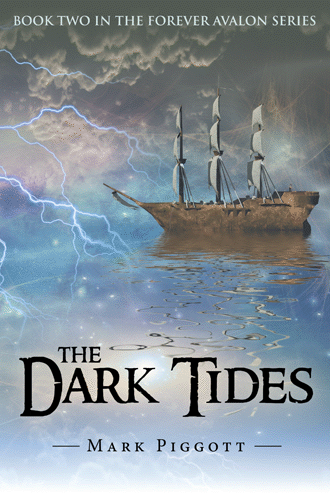
For a writer, these varied concepts of what lies after death a part of the story. Sometimes, you don’t just kill a character. Part of their life story is their belief in what comes next. In my second book, The Dark Tides, Lord Baldrid, High King of the Elves, reflected on his own mortality as the Gil-Gamesh, Lord Bryan MoonDrake, is brought to Alfheimer
***
As the Queen and Lady Lyllodoria continued their conversation, Lord Baldrid stepped back to speak with Nevan.
“You have my deepest sympathies on your loss young Nevan Forest,” he said extending his hand to Nevan. Nevan shook his hand and bowed courteously. “Sir Thomas was a true friend of Alfheimer. He will be sorely missed.”
“Thank you Lord Baldrid, that means a lot,” Nevan said with humility. “I just hate that my first conversation with the Gil-Gamesh is to tell him of my father’s death. I really don’t want to add to his pain.”
“The news will hurt at first, but he will accept the solace in knowing that your father is now part of the magic that is Avalon. We all accept this as part of our own mortality.”
“Excuse me for asking milord, but aren’t Elves immortal?” Nevan
asked.“We are, my young Captain, but even immortal beings can fall to the specter of death. It is something we all must face at one time in our lives. I have lived for more than 5,000 years and I still wonder when the day will come that I will walk, hand-in-hand, with Sehanine Moonbow, the Daughter of the Night Skies. It is something that haunts even me, but I have found that to reflect on death helps one appreciate the life you have.”
***
The myths and legends of the after in folklore can give a fantasy author, like me, the base for to rest on. In book three of the Forever Avalon series, The Outlander War (to be published later this year but available for preview now at Inkitt.com), I delve into two of these mythical realms beyond the grave … Purgatory and Vídbláin. Vídbláin is the mythical realm from Norse mythology where the survivors of Ragnarök will take shelter. It is also considered the afterlife where the Ljósálfar or Light Elves go when they die. That’s how I portrayed it in The Outlander War.
As for Purgatory, I have a more grim and dire description of that ungodly place. I imagined it like a combination of Valhalla and Hell, where fallen warriors go to reclaim their honor and earn their way into paradise. Here is an excerpt from The Outlander War that describes Purgatory in the world of Forever Avalon.
***
The Gates of Purgatory were as foul as any of the many levels of the underworld. The bones littered the ground from countless battles between the demons and undead creatures of the underworld that tried to escape to the real world. Only the Wraith Legion stood between them and spreading their evils in the world above.
The wraiths were fallen knights given penance to guard the gates for one thousand years to earn their place in paradise. They wore armored shells of plate mail, but instead of a helmet, a ghostly visage of a skull hovered over the top of the armor. It was a faceless reflection of their human life. Across their heart sat a fiery red gem—a heartstone. The gem beat with the blood of the wraith; powerful magic imbuing life into the soulless creature.
Beyond the gates lies the Retched Wasteland, a vast desert that separated the real world from Purgatory. The dark wastes burned from the fires of Hell below instead of the sun above. Anyone who made it past the wraiths usually found themselves lost in the dark recesses of the Retched Wasteland.
***
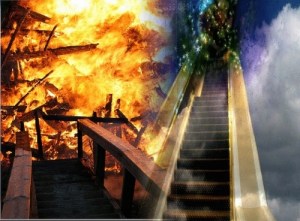 It was Plato who said, “The soul takes nothing with her to the next world but her education and her culture. At the beginning of the journey to the next world, one’s education and culture can either provide the greatest assistance or else act as the greatest burden, to the person who has just died.” Although this sounds a little more like reincarnation than the afterlife, I think it speaks of a higher purpose. We are taking all we are from this world into the next when we die. That’s a lot of baggage to bring with you. The stories of one’s life can be told by what you take with you into the next. That brings some peace and solace while others hope it is enough to earn them a place in the afterlife.
Whatever you believe, it is fertile ground for writers to express their own personal beliefs or maybe even explore new ideas within the stories they create.
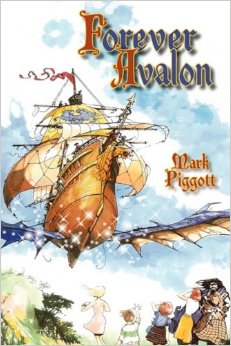
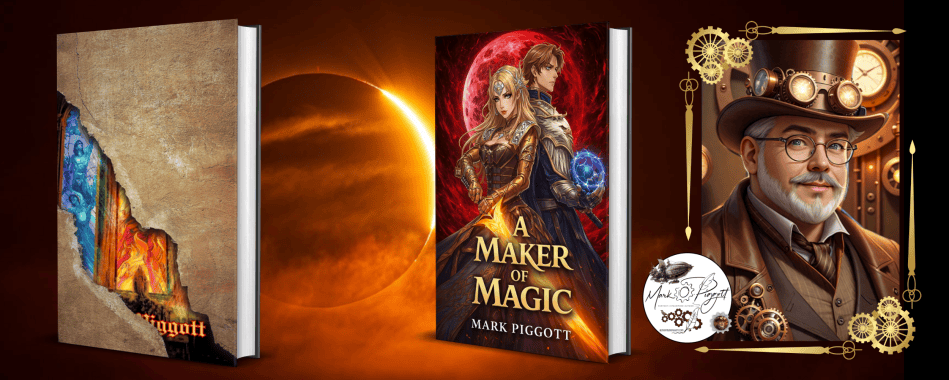
 Forever Avalon is available for purchase at Amazon and Barnes and Noble. The Dark Tides is available for purchase at Amazon, Barnes and Noble and iUniverse. The Outlander War can be previewed at Inkitt and cast your vote to help me get it published.
 Inspiration … it’s a word I use a lot in most of my social media posts. You’ll find #inspiration in almost everything I write. I can relate to so many different things as I weave my stories together. Movies, books, television, theater, and music give me the focus and drive in everything I do. Even as I am writing this blog, I am listening to Joss Whedon’s 2005 sci-fi classic Serenity.
 It’s the simplest things in life that inspire us. I remember a few months ago when I was working to finish the third book in the
 Let’s start at the end and work our way back. In 1973, Heston starred in Soylent Green with Chuck Conners, Leigh Taylor-Young, and the great Edward G. Robinson. In the year 2022, the people of Earth survive on a ration known as Soylent Green. When an executive at the factory is murdered, Detective Robert Thorn (Heston) investigates the case. This leads to conspiracy, intrigue, and murder along with the shocking discovery that their rations are made from the dead. Like a lot of the other movies of its time, Soylent Green hit upon the fear of the era … overpopulation, starvation, nuclear war, etc. The film is loosely based upon the 1966 science fiction novel Make Room! Make Room! by Harry Harrison. It won the Nebula Award for Best Dramatic Presentation and the Saturn Award for Best Science Fiction Film in 1973. This was also Edward G. Robinson’s last movie so that makes it even better, but it’s Heston that drives this film. His performance turned, what could have been a boring movie, into an edge of your seat crime thriller.
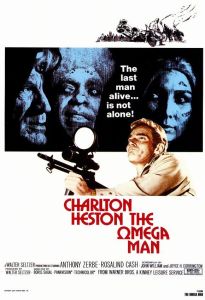 In 1971, Charlton Heston starred in The Omega Man, based on the novel I am Legend by Richard Matheson. If that sounds familiar to you, it is the same name as the 2007 movie I am Legend starring Will Smith. There was also a 1964 adaptation called The Last Man on Earth starring Vincent Price. In any case, Heston’s version is, to me, the true representation of the novel. It’s about Dr. Robert Neville (Heston) the sole survivor of a plague that killed or turned most of the population into zombie-like creatures. His blood held the key to curing the victims and also vaccinating other survivors. This movie had many firsts, including the first interracial kiss between Heston and co-star Rosalind Cash as Lisa. Another great aspect of the film was the empty streets of Los Angeles. They filmed in downtown LA on a Sunday morning to show the post-apocalyptic, deserted streets. Though the movie only got a 55% rating on
 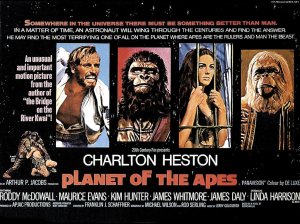 The last movie is the 1968 classic Planet of the Apes and it’s sequel, Beneath the Planet of the Apes. As astronaut George Taylor, Heston and his team’s space flight takes them more than 2000 years into the future where apes now rule and humans are mute slaves. Of course, you don’t find this out until the end of the movie when you see the classic image of the Statue of Liberty, rusted and torn apart on the shoreline. This movie hits on a big theme of that era, equality and racism, but this time, it’s the humans being discriminated against. The movie was the first for large-scale make-up effects for all the actors cast as apes. Heston shines in his role as the only talking human in a world of talking apes. His arrogance, vanity, and narcissism comes through in his tough-guy persona as he struggles to survive. He also has to share time with the late great Roddy McDowell, who starred in all five Planet of the Apes movies. In the end, though, this is one of Heston’s most memorable roles.
 “Life is to be lived, not controlled; and humanity is won by continuing to play in the face of certain defeat.” That’s from Invisible Man by Ralph Ellison. That’s just one constant you can always find throughout literature, words to live by and wisdom to navigate through the rivers of self-doubt. As authors, we represent the struggles of not only our own lives but that of the world events happening around us. Authors want to instill hope, courage, determination and justice in the words we right.
 The end of the world has been prophesied since the dawn of time. The Mayans said the world would end on December 21, 2012. The Vikings called it Ragnarök when the world ends and the Norse Gods die, only to be reborn. Of course, the book of Revelation in the New Testament goes into detail about the end of the world and the second coming of Jesus; and with the current climate of financial, political and global upheaval happening today, people are scared that our time has come.
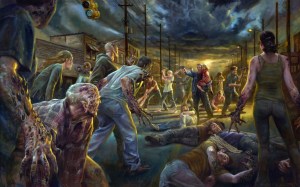 As writers, the end of the world can come about through endless possibilities and that gives us so many options in the stories we tell: Zombie apocalypse, machines taking control, deadly viruses, nuclear war, climate change, etc. We are fatalistic in our views of the apocalypse and show humanity at its worst to bring about the end of the world. Yet, through all that turmoil and tribulation, we find a glimmer of hope. There is always one guiding light or shining star that wins out in the end and gives everyone, from readers to storytellers alike, that spark of optimism that will inspire.
 Disney is known for its great animated movies, the majority of which take place in the fantasy genre. Classics like Snow White and the Seven Dwarfs, Sleeping Beauty and The Sword in the Stone have all the right elements of a great fantasy movie: wizards and witches, dragons and knights, good versus evil, etc. There is one, however, that was a beautiful adaptation of a classic fantasy novel that Disney decided was too dark and scary and swept it under the rug of forgotten classics. I am, of course, referring to The Black Cauldron.
 The imagery in this movie was quite dark and spooky, especially for a kid’s animated movie. The Horned King looked like a walking corpse. It had all the earmarks of a Disney movie with the boy hero, a beautiful princess, the evil villain and his henchmen, and of course, the comedic sidekick; but even with all that, Disney had problems with the film. After its initial audience screening, the Disney Studio chairman Jeffrey Katzenberg ordered massive edits and cuts in the film, particularly in the “cauldron born” scene where the Horned King brings his army of the dead to life. There was even scenes where one of the “cauldron born” monsters sliced the neck of one victim and the torso of another. It was very gruesome indeed.